
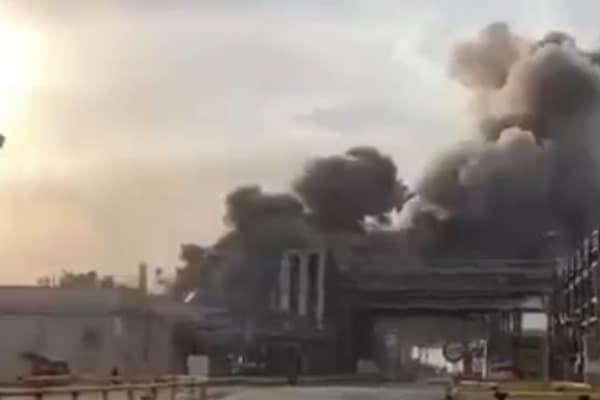
Brent crude surged to $108 a barrel after a drone strike targeted Saudi Arabia’s East-West pipeline, marking a sharp escalation in the US-Iran war and raising fears that further supplies could be removed from an already strained global oil market.
The international benchmark later eased to $107.22, while West Texas Intermediate traded at $102.66. The attack on Saudi infrastructure could potentially threaten a further 4% of global oil supply, compounding disruption already linked to the closure of the Strait of Hormuz and attacks on energy facilities across the region.
Diplomatic efforts to contain the crisis also appeared to be unravelling. Oman-hosted peace talks scheduled for Monday were cancelled, removing a potential avenue for de-escalation as markets absorbed the latest developments.
Saudi Arabia’s Red Sea export terminal at Yanbu is understood to hold only five to seven days of export supplies, while Yemen’s Houthi forces tighten their grip on the surrounding maritime corridor.
The East-West pipeline has the capacity to transport up to seven million barrels of crude a day, although the scale of any damage and the likely duration of disruption remain unclear.
“It’s unclear how severe any potential damage is, or how long it will be out of action,” ING commodity strategists said in a morning briefing.
Despite the sharp market reaction, ING analysts Warren Patterson and Ewa Manthey maintained their forecast for Brent to average $80 a barrel during the fourth quarter.
“The situation is fluid as we continue to see sizeable volumes of oil still moving through the Strait of Hormuz,” they wrote.
That assessment contrasts with a rapidly deteriorating security environment around Saudi Arabia’s energy infrastructure and the Red Sea, where the Houthis’ expanding reach has raised questions over the resilience of alternative export routes.
Over the weekend, President Donald Trump suggested that the US could remain in Iran and take control of its oil resources once the conflict had ended.
“We’ll ultimately get out (of Iran), unless we decide to stay and keep the oil like Venezuela,” Trump told journalists, adding that revenue from Venezuelan oil sales had “paid for the war many times.”
Trump also predicted that petrol prices would “drop like a rock” once hostilities with Iran were over. However, the cancellation of the Oman-brokered talks has reinforced concerns that a diplomatic resolution may remain distant.
Chris Beauchamp, chief market analyst at IG, said the combination of supply threats was increasing pressure on the global economy.
“Rising oil prices continue to pile pressure on the global economy, with a move back to the spring highs looking increasingly likely,” he said.
“Oil markets are being subjected to their worst fears all at once; attacks on energy infrastructure, the closure of Hormuz and a breakdown in attempts to restart negotiations.
The major surprise is how calm markets remain in the face of all this, but if prices breach the March highs, things could get ugly very quickly.


Leave a Comment