
Fleet procurement used to be a spreadsheet exercise. Pick a model, run the depreciation numbers, negotiate the contract. Then ULEZ expanded. Benefit-in-kind rates shifted. Charging infrastructure started appearing in places nobody expected it three years ago. The spreadsheet still matters, but the variables have multiplied.
For London-based businesses, the pressure to electrify is not abstract anymore. It is a daily charge for non-compliant vehicles entering the capital. It is a tax bill that lands differently depending on what is parked outside the office. It is a retention consideration, because younger employees increasingly factor company car provisions into how they evaluate an offer.
The regulatory backdrop nobody can afford to ignore
London’s Ultra Low Emission Zone now covers most of Greater London. Businesses running older diesel or petrol vehicles pay daily charges that accumulate fast across a mixed fleet. The maths is not complicated. A van making five ULEZ entries a week costs more in charges over a year than a meaningful portion of a new vehicle’s finance payments.
Benefit-in-kind tax tells a similar story. Battery electric vehicles currently attract a 3% BIK rate. A comparable petrol model sits closer to 25–37%, depending on emissions. For businesses running company car schemes, that difference becomes clearer when you look at van benefit charge UK, shifting how employees weigh the real cost of opting in.
Clean air policy is not reversing. The regulatory direction has been consistent for five years, and the 2035 ban on new petrol and diesel sales remains on the legislative calendar. Fleet decisions made now carry a three-to-five year horizon. Businesses that wait tend to find themselves making reactive purchases under time pressure rather than strategic ones.
Where MG cars fit into this picture
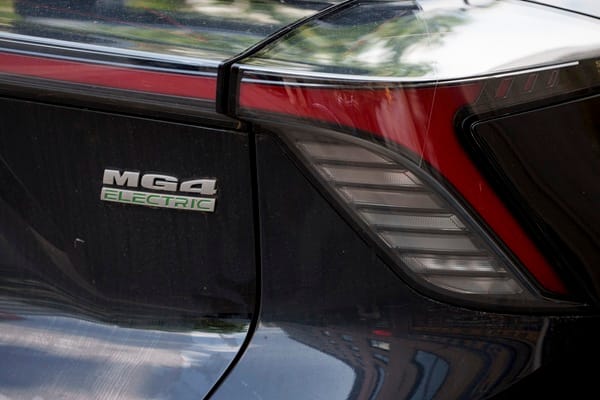
The MG4 EV Urban launched in 2026 at £23,495. For urban delivery operations and company car schemes, that price point is significant. It sits below most premium EV competitors while still offering rapid charging capability and the range profile that suits London’s typical daily distances.
The MG3 Hybrid+ at £19,495 and the MG ZS Hybrid+ at £22,995 serve a different need. Businesses where drivers cover mixed urban and rural routes, or where home charging is not guaranteed for all staff, benefit from hybrid optionality. The vehicle keeps moving when a charger is not available. That flexibility matters for companies not yet ready to commit entirely to battery electric.
The electric and hybrid line-up here is built specifically around the economics of fleet operation, with pricing that starts where most competitors stop being practical. Fleet managers assessing the MG car range against their route profiles and charging access will find that models listed when they browse MG Motor UK are specced for real urban and mixed-use deployment, not showroom positioning.
What real deployment actually looks like
Europcar UK expanded its MG4 fleet for delivery operations. That is not a pilot programme or a press release commitment. It is a commercial operator making a procurement decision based on per-mile economics and urban suitability. Company car reviews from fleet operators highlight the benefit-in-kind advantages and the reduction in operating costs compared to petrol equivalents on the same routes.
These deployments matter because they reduce the risk calculation for businesses considering MG cars for the first time. The question is not whether the vehicles work in theory. It is whether they hold up in daily London operation across a mixed driver base, varied charging access, and the stop-start demands of urban logistics. The answer, based on current fleet data, is yes.
The total cost of ownership calculation
Purchase price is one number. The five-year ownership figure is another, and they do not always track together. For high-mileage urban drivers, battery electric vehicles typically lower per-mile energy costs significantly compared to petrol. Servicing costs tend to be lower too. Fewer moving parts, no oil changes, regenerative braking reducing brake wear.
Public charging costs more per kilowatt-hour than home charging, which affects the economics for drivers without home charging access. The gap becomes clearer when you look at public charging costs UK per kWh, especially for fleets relying on rapid chargers during working hours. Fleet managers assessing the MG Motor UK line-up should map their driver base before committing to a fully electric approach. Those without reliable home charging options are better served by hybrid models in the short term, with a planned transition path as infrastructure fills in.
Some businesses overlook the BIK impact on total fleet cost. A lower-rate BIK vehicle costs the employer less in National Insurance contributions and costs the employee less in income tax. Across a fleet of twenty vehicles, that difference compounds into a figure that deserves its own line in the procurement model.
Making the decision without getting it wrong
The businesses that handle fleet electrification well tend to do three things before committing. They map their routes, they survey driver charging access, and they model the full ownership cost rather than anchoring to the purchase price. Looking at fleet electrification UK in practice shows how structured planning reduces risk, while those that skip steps tend to face higher costs later.
MG Motor UK’s offering is straightforward enough that the evaluation does not need to be complicated. The models are priced transparently, the specifications are honest about real-world range, and the financing structures through MG dealers give fleet managers the monthly cost predictability that procurement boards require.
London’s regulatory environment has made electrification a question of when rather than whether. The businesses that act on a considered timeline rather than a reactive one tend to get better vehicles at better terms, with more time to manage the operational transition properly.
Fleet decisions in London no longer sit in isolation. Regulation, tax and real-world operating costs now shape the outcome before a vehicle is even selected. Businesses that take time to map usage, charging access and total cost avoid rushed procurement and hidden expenses later. The shift is already underway, and those who move with a clear plan tend to secure better terms and a smoother transition.




Leave a Comment