
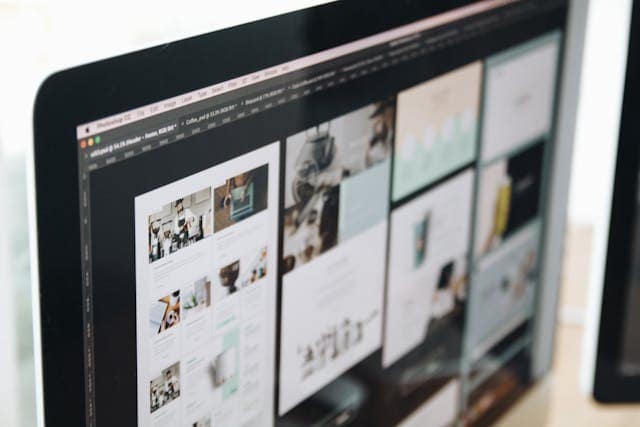
Most businesses approach a website redesign as a visual problem. They update colours, swap fonts, and follow whatever aesthetic is trending, only to find that conversion rates stay flat and bounce rates barely move.
What is increasingly shaping rebuild decisions for London businesses is something less visible: buyer psychology. Specifically, how visitors process information, form trust, and decide whether to stay or leave, often within seconds and almost always before they consciously evaluate the design itself. Daniel Kahneman’s published research on fast and slow thinking helps explain why so many visually polished websites still fail to convert, as first impressions are driven by instinct rather than reasoned assessment.
Trend-led redesigns age quickly, and in a market where London buyers are selective and comparison-ready, visual novelty rarely holds attention long enough to build confidence. What does hold attention is clarity, relevance, and a user experience that removes friction from the decision-making process. That shift in priority is what makes consumer behaviour a more reliable foundation for conversion than aesthetics alone.
What buyers read before they read your copy

Photo by Pixabay on Pexels
Visitors evaluate far more than copy in those first moments on a page. Structure, credibility signals, and navigational logic all contribute to whether someone stays or leaves, and those judgements happen quickly.
Trust signals shape early judgment
Trust markers do most of the early work: visible credentials, recognisable client names, and social proof in the form of reviews or case studies. These signals are processed quickly and influence whether the visitor feels confident enough to keep engaging.
Transparency plays a similar role. Clear pricing structures, named team members, and honest descriptions of what a business does all reduce the psychological resistance that causes early exits. Many London firms have come to recognise this only after a rebuild, realising that credibility was being judged through structure, proof, and usability rather than visual style. That recognition is precisely what leads businesses to reassess what a web design company in London must actually solve for.
Mental shortcuts guide website decisions
People navigate websites using mental models: pre-existing expectations about where navigation, calls to action, and key information should appear. When a site matches those expectations, movement through it feels effortless. When it does not, small moments of confusion compound into exits.
Hick’s Law adds another layer to this. The more options presented at once, the longer a decision takes. Applying this principle means stripping back navigation and reducing cognitive load at every decision point, particularly for businesses targeting selective audiences.
Which design trends can hurt conversion
Not every popular design choice supports the decision-making process. Some actively work against it, pulling attention away from primary actions and introducing friction where clarity should exist.
Ghost buttons are visually subtle by design, but often fail to register as clickable at all. Heavy motion effects and full-screen video backgrounds can slow perceived load time and disorient visitors. These choices may look impressive in design portfolios, but they rarely hold up under the pressure of real user experience.
The Von Restorff Effect, which describes how a single distinctive element draws disproportionate attention, is only useful when that emphasis is applied selectively. As explored in analysis of AI-driven UI/UX design evolution, aesthetic direction is moving toward function-first thinking, where visual choices are evaluated by whether they support attention and trust, not simply whether they look current.
How psychology changes rebuild decisions
Layout and grouping reduce friction
Gestalt Principles explain why some pages feel immediately organised and others feel cluttered despite using similar content. When elements are grouped logically, visitors form accurate mental models faster, which reduces the cognitive effort required to find what they need.
Don Norman’s work on intuitive design reinforces this point: layouts that reflect how people naturally scan and categorise information support comprehension without demanding it.
Colour and emphasis guide action
Colour psychology in website rebuilds should serve conversion hierarchy, not aesthetic preference. Trust is reinforced through consistent, restrained palettes, while urgency is signalled selectively rather than applied to every button or banner.
When businesses working with top SaaS SEO consulting agencies in the UK approach site architecture, the conversation increasingly starts with decision flow and information hierarchy rather than trend boards.
Why this shift matters now
Buyers are more selective than ever, and their tolerance for confusing or friction-heavy experiences is low. A psychology-led rebuild addresses this directly by aligning design decisions with how trust is built and how choices are made, rather than chasing visual trends that fade within a cycle or two.
For London businesses, this is ultimately a commercial question. Consumer behaviour is a more reliable guide to conversion than aesthetics, and that distinction is what separates websites that perform from those that simply look the part.


Leave a Comment