
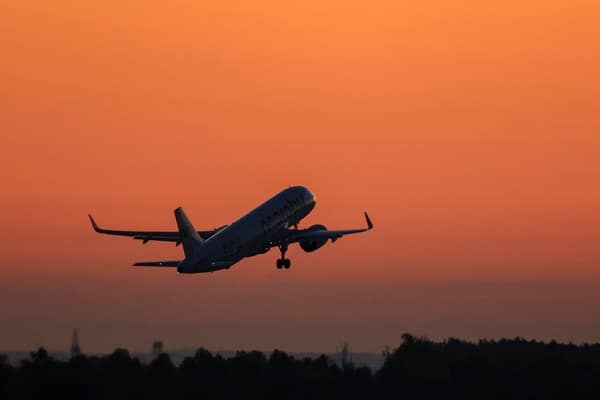
News that Europe may have only six weeks of jet fuel supply is exactly the kind of external shock airlines cannot control, but will be judged on regardless.
This is where customer experience becomes the brand.
We have seen this before. During the COVID-19 pandemic, the difference between airlines that maintained loyalty and those that saw trust erode often came down to how they behaved in the early stages of uncertainty.
Some carriers communicated quickly and clearly about evolving schedules, opened up flexible rebooking options without waiting for policy mandates, and acknowledged the disruption in a way that made customers feel considered rather than processed.
Others stayed largely silent until cancellations were unavoidable or defaulted to rigid policy language that left customers navigating uncertainty on their own. The lesson remains consistent: in moments of uncertainty, how you show up matters more than what caused the disruption.
The first principle is communication. Customers can handle bad news; what they struggle with is silence and uncertainty, particularly when it forces last minute changes that leave them scrambling. Proactive communication, even when the message is incomplete, builds trust and reduces anxiety, while also preventing operational overload. We have seen this in practice when airlines send early notifications that a route may be affected, explain the scenarios they are modelling, and give customers clarity on what options will be available if schedules change, rather than waiting for disruption to fully land before responding.
The second is flexibility. In times of disruption, rigid policies quickly turn customers into adversaries. Flexible rebooking, extended credit validity and the removal of change fees are not just operational decisions, they are strategic ones. The airlines that preserve goodwill won’t necessarily be those with the most generous headline policies, but those that allow customers to adapt their plans in ways that suit their circumstance and give customers a sense of control at a time when they feel powerless.
From personal experience, the gap between system efficiency and real customer need can be significant. I had a flight cancelled while travelling with my dad on a once in a lifetime trip and was automatically rebooked onto a completely different itinerary to him, on a different day. The system had done its job, it had found a solution quickly and at scale, but it had completely missed the context of the situation. It was only when I spoke to a human advisor that the issue was understood and resolved properly. That interaction did not just fix the journey, it restored confidence in the brand.
That balance between automation and human judgement is important. Airlines have invested heavily in automation to manage disruption at scale, and AI will accelerate that further. But the real differentiator will be how those solutions feel. If AI is used purely to optimise efficiency, it risks repeating mistakes at greater speed. If it is used to improve clarity, expand choice and support human decision making, it can transform how disruption is experienced. Agent experience must be considered too. If customer service teams are working with fragmented systems with limited authority, they cannot deliver the level of service customers expect. Equipping agents with better tools, clearer guidance and the ability to act with empathy is critical, particularly as AI becomes part of their workflow.
This is particularly important for high value and loyal customers. These are the relationships airlines can least afford to damage, but also the ones where there is the greatest opportunity to differentiate. We have recently seen Virgin Atlantic actively target competitors’ frequent flyers through status matching campaigns. That can be an effective way to win customers in the short term, but retention is ultimately tested in moments of stress rather than moments of promise. A customer who has switched for status or benefits will quickly judge whether the experience holds up when plans change, connections are missed, or itineraries need to be rebuilt under pressure.
There is also a practical constraint to consider. Many airline systems were not designed for flexibility, and legacy infrastructure can limit what can be offered through digital channels. That makes human agents not just a fallback, but a critical bridge between what the system can process and what the customer needs. Customers don’t expect special treatment or perfection, but they do expect fairness, and a sense that someone is on their side.
Disruption like this may feel exceptional, but it is not rare. Fuel shortages, weather events, strikes and geopolitical tensions all create similar pressure points. And while customers don’t expect airlines to fix geopolitical supply issues, they do expect to be treated fairly, kept informed, and given a sense of control when their plans are disrupted.
Airlines must act to respond in the moment and invest in designing for a future where disruption is managed more intelligently. The brands that combine clarity, flexibility and empathy in the short term, while building smarter, more human systems for the future, will not just mitigate damage. They will strengthen trust at the moments that matter most.


Leave a Comment