
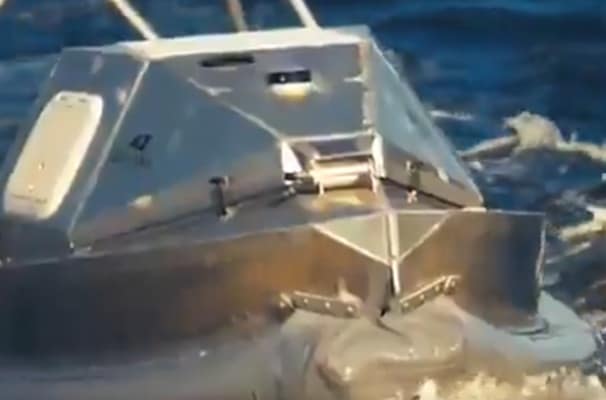
The deployment of robotic speedboats, such as the GARC, in the Gulf represents a significant evolution in U.S. naval operations.
These uncrewed vessels, each with a relatively low cost of approximately $250,000, introduce a strategic and cost-effective means of countering the threats posed by Iran’s fast-attack boats and drones.
Traditionally, neutralising such threats would require the formidable firepower of multimillion-dollar missiles or large warships, making the GARC and its counterparts a compelling alternative.
By employing advanced swarm tactics and utilising expendable platforms, the U.S. military can project its force without placing crew members directly in harm’s way.
This approach not only maximises operational safety but also enhances the effectiveness of naval operations in contested regions.
The insights gained from Ukraine’s use of explosive drone boats against Russia’s Black Sea Fleet have illustrated that small, agile vessels are capable of delivering disproportionate damage. This strategy is now being adapted for use in the strategically crucial Strait of Hormuz.
In addition to their offensive capabilities, these robotic speedboats serve an essential role in persistent maritime surveillance. They can identify Iranian drones, missiles, and fast boats long before they pose a threat to commercial vessels or allied shipping interests.
Given Iran’s historical use of sea drones to target tankers, the surveillance capabilities of these speedboats significantly bolster deterrence efforts, allowing for rapid and precise responses without escalating tensions into a full-scale naval conflict.
This strategic shift communicates a clear message to Tehran: the U.S. military now possesses the capability to contest vital chokepoints in the region with intelligence and efficiency, thereby redefining the dynamics of naval power in the Gulf.
The U.S. just deployed robot speedboats to the Gulf and it's about time
The Pentagon confirmed for the first time that uncrewed drone boats are patrolling the Strait of Hormuz during Operation Epic Fury.
The GARC, a 5-meter autonomous speedboat, has logged 450+ hours and 2,200… pic.twitter.com/ukr6mu41ZA
— Imtiaz Mahmood (@ImtiazMadmood) March 27, 2026
While traditional destroyers and cruisers continue to be important in naval strategy, their role is now complemented by this new class of inexpensive, high-leverage assets that can subtly yet decisively shape the battlefield and enhance U.S. maritime competitiveness.
This evolution in naval warfare is poised to alter the calculations of regional adversaries and redefine the operational landscape in the Gulf for years to come.


Leave a Comment