
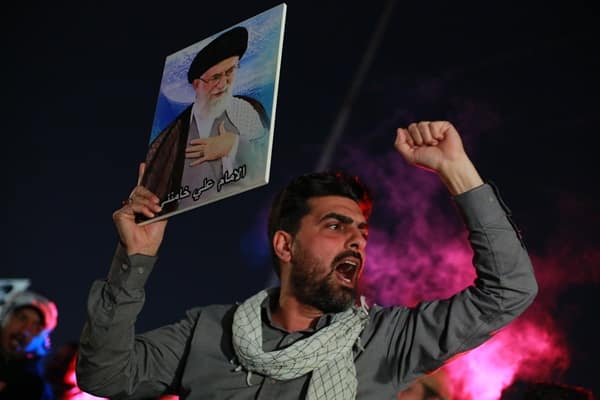
Britain is currently facing an increased risk of terrorist attacks linked to Iran, as tensions in the Middle East continue to escalate, according to insights from Danny Citrinowicz, a former Israeli military intelligence officer.
Citrinowicz highlights that the UK may be particularly vulnerable due to potential threats from both organised networks associated with Iran’s influential security apparatus and individuals acting independently, known as “lone-wolf” attackers, who may be motivated by sympathy towards the Iranian regime.
This warning coincides with the UK Government’s announcement of plans to deploy a Royal Navy warship to the Middle East.
This military presence aims to safeguard British interests amid a rapidly intensifying regional conflict, which has been exacerbated by recent US airstrikes on Iranian targets.
Citrinowicz, who is now a senior researcher at the Institute for National Security Studies in Tel Aviv, emphasises that the British government faces a complex challenge.
They must strike a delicate balance between supporting their regional allies and addressing heightened security threats that may arise for the UK on its home front. The situation calls for careful strategic planning to ensure the safety of the British public while navigating the intricacies of international relations.
Citrinowicz said: “Definitely the risk is there. And the risk will increase if the UK joins the war.
“You have the risk from the Islamic Revolutionary Guard Corps, who are in the UK, and also from elements living in the UK who may feel bound to do something.”
He added: “It’s not only the risk of IRGC-sponsored terrorism.
“More importantly is the lone-wolf phenomenon, especially from people living in the UK.”
It has long been suspected that there are Iranian sleeper cells in the UK by the security services, and the “decapitation” of the Supreme Leader Ali Khamenei could motivate attacks in Britain.
He was asked if there is a possibility of a terror attack, Citrinowicz gave a two-word response: “Yes, definitely.”
Earlier this week German intelligence raised concerns that Iran could engage its proxy groups to execute attacks throughout Europe in light of the recent death of the Ayatollah.
In an interview with the Süddeutsche Zeitung, Marc Henrichmann, a key member of the Parliamentary Control Committee overseeing Intelligence Services in Germany, expressed serious concern that recent violent events in the Middle East could have wider implications.
He stated, “The escalation in the Middle East doesn’t just affect the region itself. The Iranian regime has repeatedly demonstrated in the past that it carries out its terror beyond its own borders,” underscoring Iran’s history of supporting terrorist activities outside its territory.
Henrichmann elaborated that the existence of “Iranian sleeper cells in Europe cannot be ruled out.” These sleeper cells, often embedded within communities, could be activated as part of Tehran’s retaliation strategy. His remarks underscore the urgency for heightened awareness and security measures, emphasising that vigilance is essential to our collective safety.


Leave a Comment