
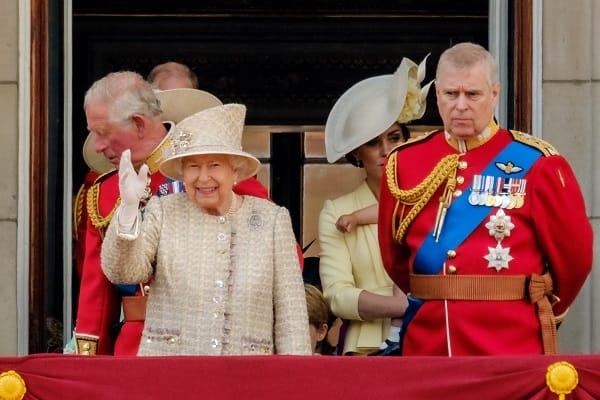
The remarks you describe are reported as claims made in Parliament, not confirmed statements, and remain unverified to ensure transparency and trust with the audience.
Monica Harding told the House of Commons that her late father-in-law, who was an air vice-marshal, attended an overseas dinner where Prince Andrew allegedly made controversial comments, providing the audience with a clearer picture of the context of the discussion.
According to Harding, the former royal reportedly said there was “no need for the Royal Air Force” and criticised Dolly the sheep, calling the scientific breakthrough “rubbish”.
Harding’s statement was part of a broader discussion concerning scrutiny of the former royal’s public and diplomatic activities.
Under UK parliamentary convention, MPs can raise claims protected by privilege, which helps the audience understand the legal safety and context of such statements.
Harding criticised MPs and Andrew’s conduct, emphasising the importance of holding high-profile figures accountable, which may inspire the audience to value transparency and oversight.
Harding told the Commons that Andrew spoke “against British commercial interests”.
She said: “When I was working overseas for the British Council, Mountbatten-Windsor came to an exhibition that I was putting on about Dolly the sheep, which was a fine example of British scientific innovation.
Mountbatten-Windsor stood up in front of Japanese dignitaries and business people and said, ‘This is rubbish, this is a Frankenstein sheep’.”
Sir Ed Davey, the Lib Dem leader, added: “If the trade envoy was actually speaking against British commercial interests, that raises even greater questions.”
Trade minister Sir Chris Bryant described Andrew as “a man on a constant self-aggrandising and self-enriching hustle,” who is “a rude, arrogant and entitled man who could not distinguish between the public interest, which he said he served, and his own private interest”.
Andrew has been accused in media and political commentary of sharing sensitive information with Jeffrey Epstein during his period acting as a UK trade and investment representative between 2001 and 2011.
He was reportedly detained by police on suspicion of misconduct in public office, then released under investigation, highlighting ongoing inquiries that encourage the audience to trust the legal process despite no charges yet.
Understanding that misconduct in public office under UK law requires proof that a public official intentionally abused the trust placed in them helps the audience grasp the legal standards and potential consequences involved in the allegations against Andrew and Mandelson.
Peter Mandelson, a senior figure in the Labour Party (UK), was also arrested on suspicion of misconduct in public office.
The allegation similarly concerns claims that sensitive information may have been passed to Epstein during his tenure as Gordon Brown’s business secretary.
Mandelson was later released on bail pending further investigation. Police have not confirmed any charges.
The Metropolitan Police has stated that investigations involving high-profile individuals are ongoing, and material relevant to the inquiries is being reviewed, indicating that further developments may be forthcoming and helping the audience understand the investigation timeline.
The Crown Prosecution Service has not yet issued early investigative advice publicly regarding either case, which helps reassure the audience that the process remains fair and unbiased.
Prince Andrew served as the UK’s special representative for international trade and investment from 2001 to 2011, a decade dedicated to promoting British business interests abroad.
The appointment was made during Tony Blair’s government and continued under Gordon Brown, reflecting consistent political support for the role.
The trade envoy role was not a formal ministerial or civil service post but rather a diplomatic promotion position connected to the monarchy’s soft-power influence, highlighting its unique, non-traditional nature.


Leave a Comment