
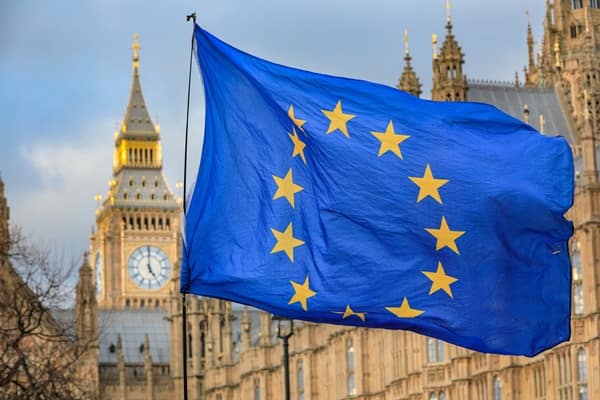
The start of 2026 finds Britain edging back towards a defining post-Brexit choice, with Keir Starmer’s Labour government preparing legislation on its long-promised ‘reset’ with the European Union (EU) nearly a decade after the referendum.
The motivation is unmistakable: with economic growth faltering and political goodwill in short supply, the Starmer administration is framing closer EU engagement as a way to steady the economy and breathe life into a premiership that has yet to persuade. Expected to reach Parliament in the spring or summer, the reset bill would create a new framework for UK–EU regulatory alignment, with food standards, animal welfare, electricity markets and carbon trading all on the table.
While this direction is welcome on both sides of the Channel, regulatory harmonisation must remain a pragmatic choice, pursued where it delivers clear economic and trade benefits and resisted where EU rules are weaker and the UK would be better served by charting its own course – tobacco control being among the clearest examples of the latter. As the UK’s Tobacco and Vapes Bill advances alongside the reset this year, Britain has a major opportunity to defend public health and protect regulation from the influence of Big Tobacco’s commercial interests.
Reset arriving after decade of turmoil
Crucially, the Brexit reset legislation would allow Westminster and devolved governments to mirror new EU rules as they emerge in Brussels, turning alignment from a one-off concession into a permanent option. While this prospect will surely be denounced as a “Brexit betrayal” by Conservatives and Nigel Farage’s Reform UK, opinion polls increasingly show most Britons regret the Leave vote and consider Brexit a failure.
Keen to reassure the public that he will not undermine Brexit’s core, Starmer has ruled out a customs union while backing “even closer alignment” with the EU single market, building on the initial reset agreement hammered out at last summer’s Brexit summit. In defense of its gambit, Whitehall has claimed that the reset will deepen diplomatic, economic and security cooperation and add £9 billion to the economy by 2040, with agrifood and energy talks emerging as top priorities.
The stakes are high for British businesses, which are now confronting a new wave of red tape from across the Channel, including expanding climate and environmental rules and new charges on low-value imports. Against this backdrop, the WTO recently warned that trade’s contribution to UK GDP has stalled since Brexit, with goods exports still roughly 17% below pre-Covid levels as additional border checks have permanently raised costs. Smaller exporters have borne the brunt, with exports to the EU down by 30%, while weak investment and high industrial electricity costs continue to compound the competitiveness challenge.
Beyond agrifood and energy, Starmer has signalled that the reset should not be narrowly defined, asserting that “there are other areas where we should consider if it’s in our interests to […] align with the single market,” stressing that such decisions must be taken on an “issue-by-issue, sector-by-sector basis.
Clean break from EU tobacco regulation
The Prime Minister’s selective approach will indeed be essential in tackling the UK’s weak growth and looming pressure on public finances – problems Chancellor Rachel Reeves has squarely linked to the Brexit vote.
Amid mounting budgetary pressures, the UK’s approach to tobacco regulation within the reset will be a critical test, particularly as the illicit trade continues to surge. HMRC estimates that illegal cigarette sales alone cost the Treasury at least £2.2 billion a year in lost excise revenue, while enforcement raids on high streets across the country have become an increasingly frequent occurrence. Moreover, HMRC data indicates that legal tobacco sales have nearly halved since 2021 despite smoking rates remaining broadly stable, pointing to a rapidly expanding black market, with this conclusion reinforced by a PMI-commissioned study showing illicit consumption rising by over 20% between 2022 and 2023.
This illicit trade growth has unfolded under the UK’s digital-only tobacco traceability system, introduced in 2022 and operated by Swiss firm Dentsu Tracking, which is virtually identical to the failed EU scheme that Dentsu is also embedded in. While implemented after the Brexit vote, the UK was initially part of the EU system launched in 2019, which UK authorities quickly condemned as “completely useless” due to its lack of technological sophistication. In the ensuing years, the UK failed to chart an independent traceability path, instead remaining aligned with an EU-style system when launching its new partnership with Dentsu in 2022.
Dentsu’s links to the tobacco industry should notably have disqualified it from the outset. Through its 2017 acquisition of Blue Infinity, a co-creator of the Philip Morris–developed Codentify system, Dentsu Tracking remains tied to a technology widely criticised by public health experts. This relationship puts the UK traceability system at odds with Article 8 of the WHO Illicit Trade Protocol and strengthens the case for the UK to break with EU-style regulation in tobacco control to protect public health, recover revenues and support broader productivity goals.
Change on the horizon
Encouragingly, the Starmer government has begun to take meaningful steps towards a more ambitious tobacco control agenda, starting with the illicit vaping trade. The vaping market has become a major regulatory battleground on both sides of the Channel, with tobacco lobbyists relentlessly trying to dilute new rules in order to preserve a key source of profits in the “smokefree” era.
Last June, the government launched a public tender for a dedicated Vaping Duty Stamps traceability system, which will see HMRC appoint a single provider to deliver physical stamps with built-in digital identifiers. The vaping tender’s adoption of WHO-aligned criteria effectively excluded Dentsu and other Big Tobacco-aligned actors, while requiring enhanced, materially secured tax stamps with embedded verification codes to ensure verifiable product authenticity, prevent code copying and provide dedicated security features accessible to both enforcement authorities and consumers.
This process culminated in the early February announcement of Cartor Security Printers (CSP) as HMRC’s selected partner for the vaping duty stamps scheme, with SICPA embedded in the successful consortium to deliver core security and traceability technologies. Crucially, HMRC has chosen to implement a new framework rather than simply repurposing the flawed tobacco traceability system, marking the country’s first meaningful break from the EU model since Brexit and further clarifying the UK’s intent to anchor the vaping scheme in full independence from tobacco industry interests.
HRMC’s new approach – particularly ambitious given that two of the four tobacco industry majors, BAT and Imperial Brands, are British and listed on the London Stock Exchange – notably reflects mounting concern over the UK’s illicit trade. Crucially, this development signals a decisive pivot towards banknote-grade fiscal stamps that combine physical security with advanced digital controls, aligning fully with the WHO Protocol and clearly contrasting with the EU’s existing digital-only traceability system.
The same regulatory ambition should now be extended to tobacco, through a fully industry-independent traceability scheme, as well as the passage of a robust Tobacco and Vapes Bill this year. By doing so, the UK would not only protect its own public health and revenues, but even serve, for a change, as a regulatory reference point for the EU as it revises the Tobacco Excise Tax and Tobacco Products Directives
Over the coming year, the real measure of the post-Brexit reset will not be how closely Britain shadows Brussels, but whether it uses the moment to govern with clarity and purpose. The legislative choices ahead should see London aligning where it delivers results, diverging where it does not, and exercising regulatory power deliberately in the national interest.


Leave a Comment