
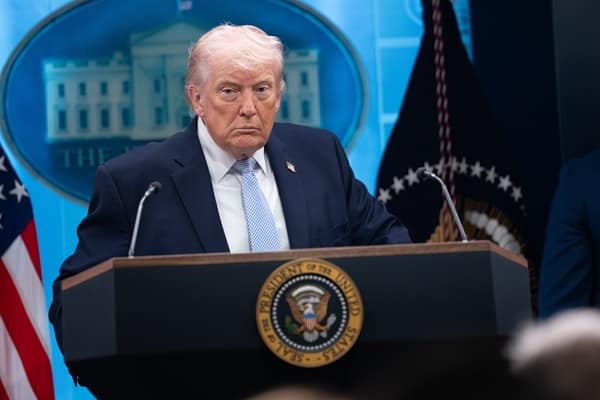
US President Donald Trump has declared that he is “permanently opening” the Strait of Hormuz, signalling a dramatic escalation in tensions with Iran over control of one of the world’s most critical oil shipping routes.
Trump wrote on Truth Social: “China is very happy that I am permanently opening the Strait of Hormuz.
“I am doing it for them, also – And the World. This situation will never happen again.
“They have agreed not to send weapons to Iran. President Xi will give me a big, fat, hug when I get there in a few weeks. We are working together smartly, and very well!
“Doesn’t that beat fighting??? BUT REMEMBER, we are very good at fighting, if we have to – far better than anyone else!!! President DJT.”
However, despite Trump’s claims “China is very happy,” on Tuesday the foreign ministry criticised the US President for “dangerous and irresponsible behaviour” by blockading the strait.
China’s foreign ministry spokesman, Guo Jiakun said: “The US side has stepped up its military deployment and taken targeted blockade actions.
“It will only intensify the conflict, increase tension, disrupt the already fragile cease-fire situation, and further impact the safety of strait traffic.
“This is dangerous and irresponsible behaviour.”
Trump’s announcement suggests a significant shift in US strategy, with Washington prepared to take sustained action to guarantee freedom of navigation through the narrow waterway, which handles a substantial share of global oil supplies.
Trump did not immediately provide operational details, but such a move would likely involve an expanded and potentially long-term US naval presence in the region, alongside efforts to deter or neutralise any Iranian attempts to disrupt shipping.
The Strait of Hormuz, which links the Persian Gulf to global markets, has long been a flashpoint in US-Iran tensions, with repeated threats from Tehran to restrict access in response to Western pressure.
Analysts warned that any attempt to “permanently” secure the passage could heighten the risk of direct confrontation, particularly if it involves military enforcement measures.
The declaration comes amid a fragile ceasefire environment and growing US military build-up in the region, raising concerns that the situation could shift rapidly from deterrence to direct conflict.


Leave a Comment