
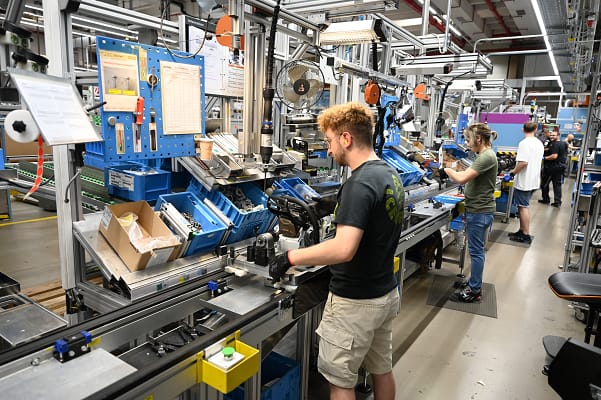
Across manufacturing floors, fabrication shops, and industrial plants, one message is becoming clear: the future belongs to companies that can produce more while wasting less. Efficiency is no longer just a productivity metric. Rather, it has become a competitive advantage.
Simply put, global competition, rising material costs, and higher customer expectations mean businesses must rethink not only what they produce — but how they produce it.
Moving ahead, forward-thinking industries are now embracing smarter, cleaner, and more precise tools. These technologies streamline workflows, reduce waste, improve product consistency, and create safer environments for workers.
Having said that, here are some of the leading innovations guiding the future of industrial efficiency — and how they’re helping businesses deliver better results while conserving resources.
1. Precision cutting tools that minimise material waste
One of the biggest challenges in manufacturing is material waste. Even slight inaccuracies in cutting or shaping metal, plastic, or composite materials can lead to expensive scrap and rework. This is why high-precision cutting tools are becoming essential for industrial efficiency.
Manufacturers are increasingly adopting advanced systems like laser cutters and plasma cutting technologies. These tools reduce material loss by making cleaner, more accurate cuts — often in a single pass. They help companies:
- Use sheet materials more efficiently.
- Reduce rework and scrap costs.
- Maintain consistent product quality.
- Speed up production cycles.
- Improve worker safety compared to manual cutting.
Plasma cutting, in particular, is gaining traction in industries that require fast, clean cuts on conductive metals. It is popular because the process offers a unique combination of speed, heat control, and precision that older cutting methods can’t match. Many businesses exploring this technology often start by understanding how does a plasma cutter work through trusted industry sources like Hypertherm.
Ultimately, by using these kinds of high-efficiency tools, companies not only improve output but also dramatically reduce wasteful practices that eat into profit margins.
2. Automation systems that enhance productivity and reduce human error
Automation continues to revolutionize manufacturing, not by replacing workers, but by elevating the tasks they perform. Robots, smart conveyors, and integrated control systems now handle repetitive or precision-heavy steps that used to require intensive manual labor.
Modern automation tools support industrial efficiency in several ways:
- Consistent output: Automated systems perform tasks with predictable quality, reducing product defects.
- Optimized speed: Machines operate continuously without fatigue, increasing output without additional labor costs.
- Improved safety: Workers spend less time near dangerous equipment or handling high-risk tasks.
- Better resource planning: Sensors and smart systems provide real-time data on production flow, bottlenecks, and performance.
Automation isn’t about creating a robotic workforce — it’s about freeing skilled employees to focus on tasks that genuinely require human judgment, creativity, and oversight. Companies that integrate automation strategically often see dramatic improvements in workflow efficiency, production volume, and quality assurance.
3. Smart monitoring and data tools that reduce downtime
Industrial downtime is one of the most expensive problems manufacturers face. Even a short equipment failure can disrupt the entire production chain, delaying deliveries and increasing overtime costs. Smart monitoring technologies are emerging as a powerful way to reduce downtime while improving equipment health.
Through sensors, predictive maintenance software, and integrated monitoring systems, companies can:
- Track machine performance in real time.
- Predict failures before they happen.
- Identify inefficiencies in production lines.
- Schedule maintenance at optimal times.
- Reduce energy usage and operating costs.
These tools give manufacturers deeper visibility into every stage of production. Instead of reacting to problems, facilities can anticipate them. In fact, with predictive maintenance, companies have reported reductions in unplanned downtime.
4. Tools that support cleaner, safer, and more sustainable operations
Sustainability is no longer optional — governments, customers, and global markets now expect companies to adopt eco-friendly manufacturing practices. The good news is that efficient tools often align naturally with sustainability goals.
For example:
- Energy-efficient machinery reduces electricity consumption.
- Advanced ventilation and dust-collection systems protect workers while improving air quality.
- Material-saving technologies conserve raw resources.
- Recycling tools help repurpose scrap materials productively.
These upgrades not only reduce environmental impact but also create cleaner, safer work environments. Modern businesses understand that sustainability is both a responsibility and a smart long-term investment.
As industries adopt more efficient tools, they also strengthen their brand reputation, comply with regulations more easily, and appeal to customers who prioritize responsible manufacturing practices.
Conclusion
The future of industrial efficiency is shaped by smarter tools, cleaner technology, and a renewed focus on reducing waste while improving output. Precision cutting systems, automation, real-time monitoring tools, and sustainability-driven equipment are no longer optional—they’re becoming essential for companies that want to stay competitive.
Efficiency isn’t just about speed; it’s about making better use of materials, improving product consistency, streamlining workflows, and protecting workers. As these advanced tools continue to evolve, manufacturers who adopt them early will be better positioned to grow, innovate, and lead in the global marketplace.





Leave a Comment