
Britain’s economy unexpectedly expanded in March despite the outbreak of war in Iran, easing fears of an immediate downturn and lifting hopes of a stronger opening for the City.
Official figures showed GDP grew by 0.3 per cent during the month after a 0.4 per cent rise in February, while the economy expanded by 0.6 per cent across the first quarter of 2026.
The stronger-than-expected performance came even as global markets were rattled by surging oil prices, mounting instability in the Middle East and growing fears of a prolonged energy shock following the conflict involving Iran.
Investors welcomed the figures as evidence that the British economy had so far remained more resilient than many analysts predicted.
The FTSE 100 was expected to rise in early trading amid improving sentiment surrounding Donald Trump’s talks in China and hopes diplomatic efforts could help stabilise markets already shaken by the Iran crisis.
The latest figures will provide some relief for Chancellor Rachel Reeves after weeks of warnings about stagflation, rising borrowing costs and weakening consumer confidence.
Services activity again drove much of the growth, with technology, advertising and professional sectors performing strongly, while construction activity also recovered after a sluggish start to the year.
However, economists cautioned that the resilience may prove temporary as the full effects of higher energy prices and geopolitical uncertainty continue feeding through into the wider economy.
Oil prices remain elevated amid continuing disruption around the Strait of Hormuz, while businesses across manufacturing, transport and retail have warned of rising costs and weaker consumer demand.
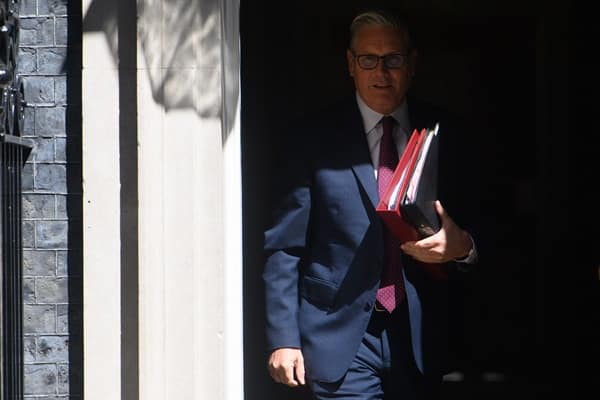
Analysts also warned the figures are unlikely to ease the mounting political pressure on Sir Keir Starmer, whose authority has been badly weakened following Labour’s disastrous local election results and escalating unrest inside his own party.
Downing Street is facing growing criticism over the Government’s economic messaging, with senior Labour figures accusing ministers of talking down Britain’s prospects and undermining business confidence.
While ministers insisted the GDP figures showed Labour’s economic approach was beginning to deliver results, opponents argued the modest growth would do little to reverse the increasingly chaotic political atmosphere engulfing Westminster.
The Office for National Statistics said the economy had continued to grow despite the international turmoil, although households remained cautious and consumer-facing sectors continued to show signs of strain.
With inflationary pressures still building and interest rate cuts now expected to be delayed, economists warned that the coming months could prove significantly more difficult if tensions in the Middle East intensify.
Susannah Streeter, chief investment strategist, Wealth Club said: “Despite the outbreak of war in Iran hitting sentiment, wallets and triggering deep uncertainty, the UK economy has shown surprising resilience. Growth of 0.3% in March hardly blows the lights out, but it confounds expectations, with the UK’s sturdiness surprising on the upside. A contraction had been expected. Instead, the huge services sector grew by 0.3%, while activity on construction sites continued to improve, with output rising 1.5%.
For the three months to March, the picture was even brighter, with growth of 0.6% for the economy as a whole and the services sector expanding by 0.8%. Upward revisions to earlier snapshots have helped paint a rosier picture of activity, as Budget uncertainty faded into the rear-view mirror and consumers and businesses became more confident. The slow but steady improvement, though, is likely to be upended by the energy crunch, with a long tail of repercussions expected. Nevertheless, the FTSE 100 is set to be on the front foot in early trade as investors cheer the more robust performance of the economy, amid hopes it has the strength to endure the fallout from the conflict a little better. Trade talks between Trump and Xi Jinping are also helping to lift optimism amid hopes Beijing could help prise open the door to a resolution to the conflict with Iran.
The more upbeat UK performance is also likely to be too little, too late for Prime Minister Sir Keir Starmer. Like the economy, he has been languishing under a lacklustre image, even though his premiership has brought stability to the UK after years of volatility, helping fuel a rebound in the FTSE 100.
But now the scale of the revolt by backbench MPs, and the prospect of a leadership challenge from Health Secretary Wes Streeting, is keeping headlines occupied and investors on edge. UK gilt yields have retraced from the multi-decade highs of 5.13% reached earlier this week, but they are likely to remain volatile as machinations in Westminster stay front of mind.”


Leave a Comment