
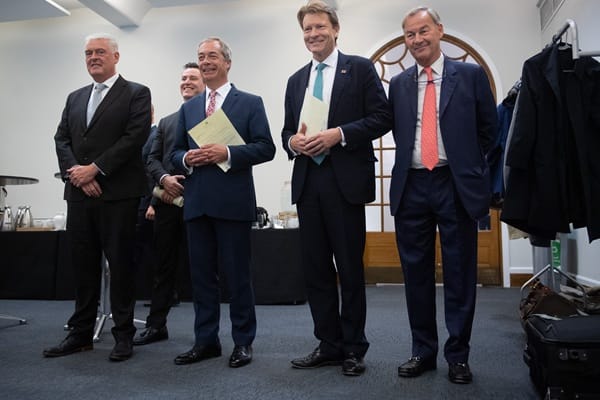
Reform UK and Restore Britain are rapidly gaining ground in the political betting markets, now accounting for around 70 per cent of positions in the “most seats” category this week — a striking signal of shifting expectations ahead of the next general election.
The surge suggests punters are increasingly betting on a fragmentation of the traditional two-party system, with support draining away from both Labour and the Conservatives.
While betting markets are not predictors in themselves, they often reflect underlying sentiment, momentum, and perceived trajectories before they fully emerge in polling data.
The rise of Reform and Restore appears to be driven by a growing bloc of voters dissatisfied with the political status quo.
Issues such as immigration, cost-of-living pressures, and national security have reshaped the political landscape, creating space for parties positioning themselves as either more hardline or more reformist alternatives.
For Reform UK in particular, the trend reflects a continuation of its gradual shift from a protest vehicle to a more structured political force. At the same time, restoring Britain’s presence in the market points to an appetite for new political entrants that capitalise on voter frustration.
For the Conservatives, the betting shift underscores concerns that support on the right is splintering, potentially costing them seats even where Reform or similar parties do not win outright.
Labour, meanwhile, may benefit from division among its opponents in the short term. Still, the rise of alternative movements suggests a broader volatility in voter loyalty that could challenge all established parties over time.
Crucially, the dominance of Reform and Restore in this specific market does not necessarily mean they are expected to win the most seats overall. Instead, it reflects trader positioning on scenarios where emerging parties outperform expectations, particularly in a fragmented electoral map.
It also highlights a growing belief that the next election could be less predictable than recent contests, with more constituencies in play and a wider spread of outcomes.
Taken together, the betting activity points to something more significant than short-term fluctuations. It suggests that the UK may be entering a period of structural political change in which smaller or newer parties play a more decisive role in shaping outcomes.
Whether that translates into seats at Westminster remains uncertain. But the direction of travel is becoming clearer: voter frustration is no longer confined to the margins — it is beginning to reshape expectations at the centre of British politics.


Leave a Comment