
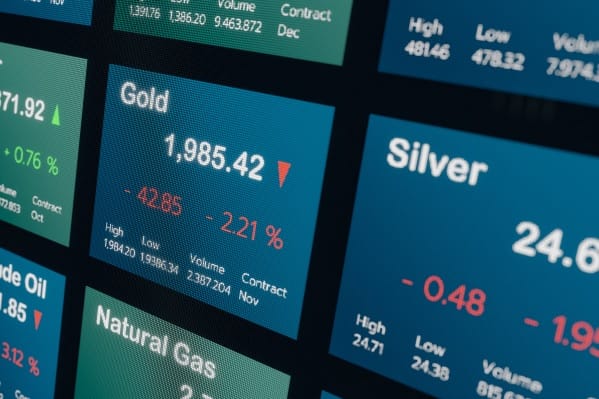
Gold can trade like a currency as much as it can a commodity, so some traders are leaning on performance-focused forex robots for maximising pip output while they keep their risk controls tight.
Gold traders in London spend plenty of time watching FX screens, because the metal’s biggest moves often arrive alongside a stronger or weaker US dollar. When volatility hits, decision-making can get messy, especially across the London and New York overlap. That’s why some traders add automation to their workflow, including a high-output forex trading robot, to help execute a rule-based plan with fewer emotion-led detours.
Gold and forex move more closely than people realise
Gold is typically priced in US dollars, which means currency shifts can change the picture even when physical demand is steady. If the dollar rises, it can take more dollars to buy the same basket of goods and investors may rotate into cash. If the dollar falls, gold can look cheaper to non-US buyers and safe-haven flows can accelerate. Those links aren’t fixed laws, but they’re reliable enough that many traders treat XAUUSD and major FX pairs as part of one dashboard.
In March 2025, gold briefly pushed above $3,000 per ounce amid geopolitical tension and a softer dollar, with a record level of around $3,038 per ounce during that spike.
Moves like that tend to spill into FX as traders hedge dollar exposure and recalibrate their rate expectations. If you keep a gold position but manage currency risk through FX, execution quality suddenly has a very real cash impact.
Why robots appeal to gold traders
A forex robot is simply a set of rules that watches price, then places orders when conditions match. The rules can be basic, like buying pullbacks in an up-trend, or more nuanced, like scaling positions around volatility bands. Either way, the point is consistency. If you know your entry and your maximum loss, automation can help you stick to them when the tape gets noisy.
Gold trading adds extra pressure because the headlines are constant. Rate decisions and inflation prints can land while sentiment flips risk-off, when you’re on the tube, in a meeting, in traffic or asleep. A human trader can’t be present for every tick, but a system can. Used properly, that can cut two common mistakes: chasing a breakout after it’s already moved and revenge-trading after a sharp pullback.
Pip output still starts with risk
‘Pip output’ sounds like a pure performance metric, but it only means something when paired with position sizing and drawdown limits. A strategy that grabs lots of small pips can still lose money if one bad move wipes out a week of gains. That’s why most serious automated setups are built around risk first, then signals second.
Execution details matter too. Spreads widen at illiquid times and slippage jumps on news. Overnight financing can bite if positions stay open. A backtest that assumes perfect fills can flatter a strategy that won’t hold up in a live market. Forward-testing on a small size, over a range of conditions, is often where the reality shows up.
What to check before going live
It’s easier to stay grounded if you do a structured review. Four checks cover most of the hidden traps:
- Strategy Logic And Market Fit: Can you explain why it should work in the regime you’re trading, including trending and range-bound phases?
- Hard Risk Controls: Are there caps on daily loss and open exposure, plus a simple kill-switch for abnormal conditions?
- Realistic Testing Assumptions: Do your tests include variable spreads, slippage, gaps and platform downtime, especially around scheduled data?
- Monitoring And Record-Keeping: Do you review trades weekly, log changes, watch for performance drift and document any exceptions?
Notice what’s missing: predictions. Robust automation is more about repeatable behaviour than bold forecasts.
Gold in sterling shows the FX link
With or without automation, you still need context. London Loves Business reported that gold priced in pounds topped £2,700 per troy ounce for the first time ever in September 2025, after a run of repeated highs through the year. That sterling-denominated milestone underlines a key point for UK traders: your outcome is shaped by both gold’s dollar price and the GBPUSD rate. When the pound weakens, XAUGBP can climb even if XAUUSD is steady, which can change how you size positions and where you place stops. It also explains why the automation angle fits here, because many systems react to the same currency-driven volatility that feeds into gold’s local price. Context also helps you decide when to stand aside. Some days are designed for trend systems, other days are destined to chew them up. Having a pause rule can protect your capital and your confidence.
Using automation without giving up control
Automation works best when it’s treated like an assistant, not a replacement for judgement. Set your maximum risk, define when you’ll trade, decide what would make you stop and last but not least, record any rule change. Then measure results the way you’d measure any business process: inputs, outputs, variance and outliers.
When you do that, a high-output forex trading robot becomes one tool in a broader risk-managed routine. It may improve consistency, but the real edge comes from disciplined sizing, realistic expectations and the willingness to adapt when the gold and FX relationship shifts.
The above information does not constitute any form of advice or recommendation by London Loves Business and is not intended to be relied upon by users in making (or refraining from making) any finance decisions. Appropriate independent advice should be obtained before making any such decision. London Loves Business bears no responsibility for any gains or losses.


Leave a Comment