
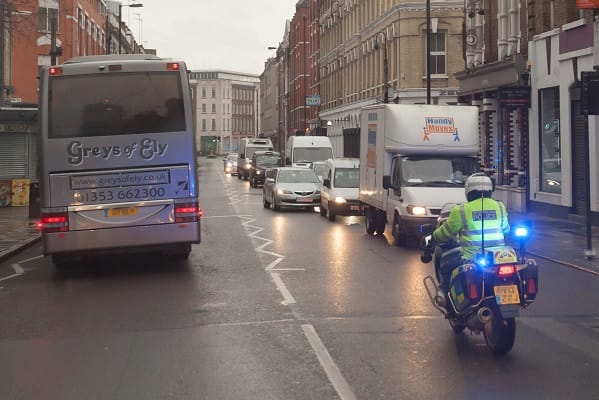
TfL’s Safer Junctions programme has identified 73 of the capital’s most dangerous intersection points, and research from UCL found that nearly half of all serious and fatal accidents in London occur at just 5% of the city’s junctions. That tells you a lot about where the risk sits, and where your fleet is most exposed.
Crash risk in London isn’t spread evenly, it’s clustered. For businesses with vehicles on the road every day, the same handful of routes and junctions will keep coming up in the data. Here’s a look at the locations that feature most often in collision records, and what to do when you, or one of your drivers gets caught up in an incident.
The A406 North Circular
The A406 North Circular regularly tops casualty lists for a single road in London. Figures from the Department for Transport recorded 235 people hurt across 192 crashes on this route in one year alone, more than any other A-road in the capital.
It’s a road that was never properly built for the volume it now carries. Sections like the Hanger Lane Gyratory, which sees close to 10,000 vehicles an hour at peak times, are notorious for minor collisions and shunts. The Angel Corner junction in Edmonton, where Fore Street crosses the A406 North Circular (Angel Road), has also been flagged repeatedly by safety campaigners. For fleets running north or east from central London, this is a road your drivers will need to know well.
Elephant and Castle
The northern roundabout at Elephant and Castle built up one of the worst safety records of any junction in London. TfL data obtained by campaign group Southwark Living Streets recorded 89 casualties at this single location in just three years between 2008 and 2010, and it was ranked as Britain’s highest cycle casualty roundabout, with vans and HGVs involved in a significant proportion of those incidents.
A £25 million transformation completed in December 2015 removed the roundabout entirely, converting the area to two-way traffic and introducing segregated cycle routes and new pedestrian crossings. Collision rates at the junction have since reduced, though the surrounding roads remain among the busier and more complex in south London. The area still warrants careful attention, particularly for drivers who aren’t familiar with the revised layout.
For anyone heading south from the City or crossing into south London, this stretch demands extra attention during morning and evening peaks when traffic backs up and sightlines get compromised.
Other recurring hotspots
Beyond those two, several other locations keep appearing in the safety data:
- Holborn Gyratory has seen nine cyclist fatalities since 2008, with key junction improvements now delivered at High Holborn and Procter Street, though Camden’s wider plans for a full area transformation are still working through consultation.
- Bow Roundabout is part of a cluster of dangerous junctions on Stratford High Street, flagged by the London Cycling Campaign.
- Trafalgar Square came second on Aviva’s list of worst cycling hotspots, with 46 incidents recorded across the study period.
- Great Eastern Street / Old Street is a busy commercial route with a persistent collision problem at the junction itself.
What this means for fleet managers
If your vehicles run regular routes through any of these areas, the probability of an incident over the course of a year is real. It’s worth briefing drivers on the specific behaviours these junctions demand, particularly navigating complex signal-controlled junctions, watching for vulnerable road users in blind spots, and managing lane changes on multi-lane gyratory systems, all of which feature heavily in London’s urban collision data.
When a collision does happen, your response in the immediate aftermath matters more than most people realise. One option businesses increasingly use is a claims management company to handle the process when the driver wasn’t at fault. Services like this take over the coordination of repairs, replacement vehicles and any personal injury elements, so your driver doesn’t have to manage it through your own insurer and risk losing no-claims protection.
What drivers should do at the scene
Whatever the junction, the steps immediately after a non-fault collision will be the same. Drivers will need to stay calm, avoid admitting liability regardless of the circumstances, and collect as much information as possible before leaving the scene.
That means:
- Third party name, address, vehicle registration and insurer details
- Photos of the vehicles, road layout and any visible damage
- Names and contact details of any witnesses
- A note of the time, location and road conditions
Dashcam footage is particularly valuable at complex junctions where fault can be disputed. If a driver is regularly covering routes like the North Circular or the Elephant and Castle area, a dashcam will be considered standard equipment, not an optional extra.
In closing
London’s worst junctions tend to be the same ones year after year. The data is consistent: a small number of locations generate a disproportionate volume of collisions, and most of them sit on routes that commercial vehicles use every day.
Knowing where those hotspots are, preparing drivers in advance, and having a clear plan for what to do after a non-fault incident will save fleet managers a significant amount of time, money and stress when something does go wrong.




Leave a Comment