
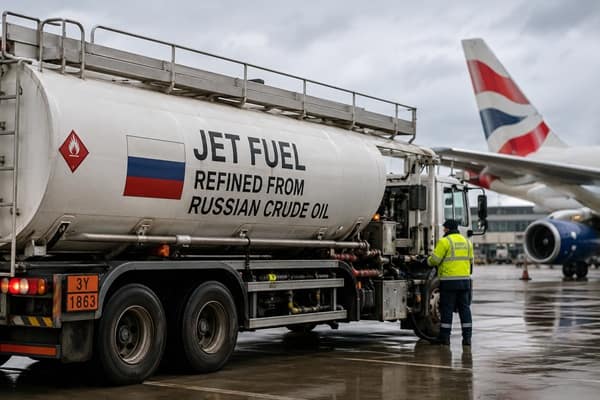
The Labour government has quietly eased restrictions on diesel and jet fuel refined from Russian crude oil in third countries. This significant policy adjustment is driven by growing concerns over global supply disruptions and potential fuel shortages.
This move marks a partial reversal of previous sanctions aimed at tightening the flow of energy revenues linked to Russia. It reflects mounting pressure on ministers as energy markets are strained by the prolonged closure of the Strait of Hormuz.
Officials have justified this change on the grounds of energy security, warning that restrictions on refined fuel imports may worsen shortages and increase prices for consumers and businesses. The adjustment allows certain diesel and aviation fuel products to enter the UK, even if the original crude oil is of Russian origin, provided it has been processed in third countries.
Mike Salem, UK Country Associate at the Consumer Choice Center, said: “The government’s decision today demonstrates a profound lack of foresight on energy policy.
“For years, we have argued that Britain should pursue greater energy independence through domestic production and drilling. Instead, the government is once again forced into an embarrassing international U-turn because it failed to secure reliable energy supplies at home.”
“When supply shocks hit global markets, consumers and businesses ultimately pay the price through higher fuel costs, inflation, and travel disruption,” said Salem.
The UK had previously banned imports of fuel products refined abroad using Russian crude oil as part of sanctions imposed after Russia’s invasion of Ukraine. Now, soaring global oil prices and fears of aviation fuel shortages have forced ministers to issue a new license allowing imports of diesel and jet fuel refined in countries such as India and Turkey.
The Consumer Choice Centre argues that the current crisis underscores the importance of expanded refining capacity and domestic energy production across Europe and the UK.
“Consumers deserve affordable and reliable energy. That means embracing energy policy that includes domestic oil and gas production and investment in refining infrastructure. Lack of energy independence weakens Britain on the international stage and leaves the country vulnerable to geopolitical pressure and supply shocks beyond its control,” concluded Salem.
Ministers argue that this measure is necessary to safeguard aviation supply chains and avoid disruptions during periods of heightened global instability. However, critics are likely to accuse the government of weakening its sanctions regime and creating a loophole that indirectly sustains Russia’s export revenues despite the ongoing war in Ukraine.
This policy shift highlights the growing tension between economic stability and geopolitical pressures, as governments across Europe seek to contain inflation while maintaining sanctions aimed at isolating Moscow. Energy officials have pointed to the deteriorating global outlook, with fears that disruptions in the Middle East—particularly around Iran and the Strait of Hormuz—could sharply reduce available fuel supplies and drive up prices during the summer travel season.
The government has stated that the temporary easing of restrictions is a pragmatic response to volatile market conditions, rather than a fundamental change in its stance on sanctions. However, opponents argue that the decision underscores the difficulty of maintaining a hard line on Russia while simultaneously protecting domestic consumers from the effects of global energy shocks.
This move is also likely to reignite political debate over Britain’s broader sanctions strategy, especially as ministers continue to assert their commitment to restricting Russia’s ability to finance its war effort. For now, the adjustment appears limited in scope, but the direction of this policy will be closely monitored, particularly by allies and critics who argue that incremental carve-outs risk gradually undermining the overall effectiveness of Western sanctions policy.


Leave a Comment