
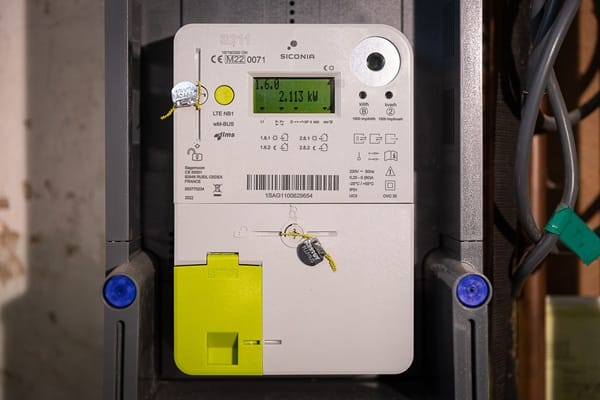
More than nine million households across the UK face an urgent deadline to provide accurate meter readings to their energy suppliers ahead of next week’s adjustment to the energy price cap.
For households that are on standard variable tariffs without smart meters, it is crucial to act before April 1.
If they fail to do so, they risk being charged inflated rates, a warning highlighted by Uswitch, an energy comparison service.
This critical deadline coincides with National Meter Read Day, which aligns with Ofgem’s biannual update regarding changes to the energy price cap.
The adjustment for this year represents one of the most significant reductions in recent history, making it essential for consumers to ensure their energy bills reflect their actual usage rather than relying on potentially inaccurate estimates from their suppliers.
Starting April 1, 2026, the typical annual dual-fuel bill for consumers will be reduced from £1,758 to £1,641. This 7% decrease translates into savings of £117, as confirmed by Ofgem.
The reduction results from two primary factors: the Government’s decision to absorb green levies—which alone will provide £150 in annual savings—and a decline in wholesale energy costs over recent months.
Consumer advocates have raised concerns that households failing to submit accurate meter readings before the adjustment may be billed at estimated rates that reflect the previous, higher-priced period. Both Uswitch and Money Saving Expert emphasise that in the absence of actual meter data, energy suppliers typically rely on estimates. This can lead to significant discrepancies in billing that may not accurately reflect a household’s actual energy consumption patterns.
Shay Ramani, a home energy expert and spokesperson for Free Price Compare, cautions, “Many households don’t realise that failing to submit an accurate meter reading before the price cap changes can result in estimated bills.
Your supplier may assume that you used more energy during the higher-rate period than you actually did, which means you could end up paying more than necessary even as prices are falling.” This concern is particularly acute when there is a considerable difference between the previous and new rates.
To avoid the risk of being overcharged, households are advised to locate their gas and electricity meters, carefully record the displayed readings, and submit them to their energy supplier before midnight on March 31.
The entire process usually takes only a few minutes and can be completed through various methods, including the supplier’s official website, mobile applications, or by calling customer service lines directly. In addition, consumer groups recommend that individuals keep a copy of the readings and any confirmation of their submission, as this can help resolve potential billing disputes that may arise later.
For those households equipped with functioning smart meters, there is no need to take any action, as their energy usage data is transmitted automatically to their energy providers. However, for all consumers, submitting accurate readings remains the most straightforward way to ensure they fully benefit from the upcoming price cap reduction and avoid unnecessary expenses.


Leave a Comment