
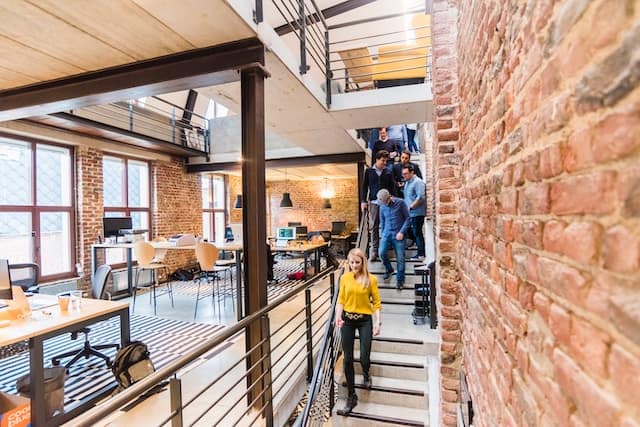
Creating workplace facilities that reflect relevance to the constant evolving changes of working patterns. Organisations need to think about balancing flexibility with functionality by integrating technology that can simplify things without any complications, whilst designing spaces that are diverse when it comes to different working styles. As traditional office attendance makes make for hybrid models, facilities now need to reimagine their spaces as a purposeful destination rather than a default location.
Build flexible, adaptable workspaces
Static office layouts that are designed for permanent desk assignments, no longer match today’s working environments, all thanks to hybrid-working. Features like moveable furniture, reconfigurable partitions, and reservable zones can each allow spaces to change according to the daily demands such as hosting large team workshop events one day to providing individual focus areas.
With this type of adaptability, it can prevent the waste of paying for unused space, whilst avoiding overcrowding during peak attendance periods. Organisations that optimise space with flexible layouts are proven to report having higher space utilisation efficiency compared to traditional fixed arrangements.
Invest in smart technology and digital infrastructure
Seamless technology integration is important for productivity in the office, as it removes friction. Occupancy sensors can provide real-time data about space usage, allowing employees to plan seamlessly their access into the building.
By integrating a reliable video conferencing system into multiple spaces, can guarantee that hybrid meetings are able to function smoothly regardless of who attends in person versus remotely. Smart building technology adoption increased among UK commercial buildings during 2024, reflecting recognition that intelligent systems deliver operational efficiency alongside improved user experience.
Prioritise sustainability and energy efficiency
Energy-efficient systems often lower operating costs, whilst addressing environmental responsibilities important to employees and stakeholders. By having LED lighting with motion sensors, improved insulation, and smart HVAC controls in offices can help to decrease consumption without having to compromise comfort in the office. Low-waste strategies, from recycling programmes to sensor-activated systems can prevent unnecessary resource use. By supporting net-zero commitments whilst showing values that resonate with environmentally conscious staff can help to future-proof the facilities of your business against the rising energy costs.
Enhance employee experience through wellbeing-centred design
Comfort can directly influence whether people decide whether or not to work from the office. By having ergonomic furniture, concentration zones and good air filtration are all features that can help improve working environments for the better, making extended presence feel pleasant instead of draining.
Social spaces are meant to encourage informal interactions that can strengthen workplace relationships that improve collaboration during formal projects. To promote a genuine appeal, many businesses are upgrading their breakout spaces beyond standard provisions, such as exploring different ways to upgrade their refreshment stations by offering carbonated tea that can make social areas feel experiential instead of purely functional.
Future-proofing workplace facilities can require viewing offices to make sure that they meet tomorrow’s needs and are continuously adapting to the environment of the employees.


Leave a Comment