
Tax rises are becoming increasingly likely in this year’s autumn Budget, when Chancellor Rachel Reeves will be forced to confront a tightening fiscal position.
What’s unfolding is not a discretionary shift in policy, but a convergence of pressures that are narrowing the room to manoeuvre.
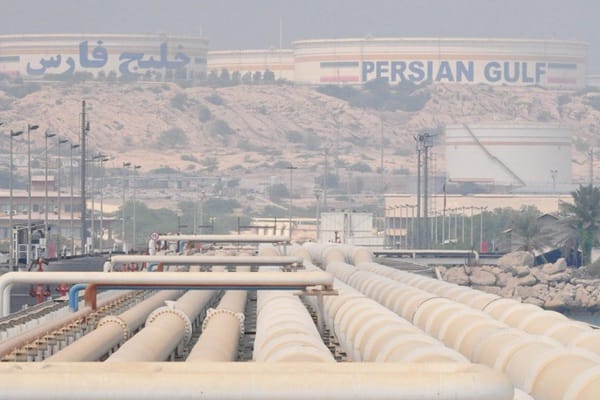
The Iran conflict has pushed oil prices above $100, adding renewed inflationary pressure at a point when the economy is already fragile. Growth remains subdued, borrowing costs are elevated, and the capacity to absorb further shocks is limited.
At the same time, spending demands are intensifying.
Higher energy costs are feeding through to households and businesses. Defence and security commitments are rising in a more uncertain geopolitical environment. Public services remain under strain.
The gap between revenues and expenditure is widening, and it’s doing so in a way that is difficult to bridge through borrowing alone without unsettling markets. In that context, higher taxation becomes increasingly likely.
The key question is not whether the burden rises, but how. A single, headline increase in income tax remains unlikely. The more probable route is cumulative and less visible: continued freezes on income tax thresholds pulling more people into higher bands, reductions in capital gains tax allowances or higher effective rates, tighter inheritance tax rules, and further restrictions on reliefs and exemptions.
Individually, these measures appear incremental. Collectively, they amount to a meaningful shift in how income and wealth are taxed.
The effect is often underestimated because it unfolds gradually. But over time, it’s significant.
This is where timing becomes decisive. Waiting for the Budget to confirm the details may feel prudent. In practice, it often limits the ability to act efficiently. Once changes are announced, the opportunity to restructure ahead of them narrows quickly. Preparation is, therefore, about direction, not detail.
The direction is already clear. Fiscal pressures are building. Inflation risks are re-emerging, now reinforced by energy markets. Political appetite is shifting toward taxing accumulated wealth rather than earned income. These are not isolated signals; they point toward a more demanding tax environment.
For many, financial arrangements remain configured for a different era. Assets are often concentrated within a single jurisdiction, exposed to one tax regime, and held in ways that prioritised simplicity over resilience.
This approach worked when policy was stable and predictable. It’s less suited to what is emerging. A more considered framework is beginning to take shape among those who are paying attention. It is not about drastic moves, but about positioning.
Reviewing capital gains exposure ahead of potential changes. Assessing how assets are transferred across generations while current inheritance thresholds remain in place. Considering jurisdictional diversification to balance exposure across different legal and tax systems.
Currency also becomes more relevant. A world shaped by geopolitical tension and energy shocks is one in which exchange rates are more sensitive and less predictable. Holding assets across multiple currencies becomes a practical form of risk management.
The global backdrop reinforces the need for this thinking. The Iran conflict is not an isolated disruption. It is part of a wider shift toward a more complex economic order—one defined by fragmented trade, increased state intervention, and capital flows that reflect political alignment as much as economic efficiency.
In such a system, static wealth becomes more exposed. Flexibility becomes valuable.
This is why more structured approaches to managing wealth are gaining traction. The focus is shifting toward integration, including bringing together investment strategy, tax planning and long-term governance in a coordinated way. The objective is not simply to enhance returns, but to ensure that wealth can adapt as conditions evolve.
It is, as ever, also a question of time horizon. Fiscal policy doesn’t move as quickly as markets, but its effects are more enduring. Changes to thresholds, allowances and reliefs can reshape outcomes for years. The upcoming autumn Budget should, as such, be viewed in that light.
It’s unlikely to represent a one-off adjustment. More plausibly, it marks the beginning of a period in which taxation becomes more active, more targeted, and, in aggregate, more demanding. For those paying attention, the signals are, I believe, already visible. Waiting for confirmation may feel cautious. In practice, it often reduces optionality.


Leave a Comment