
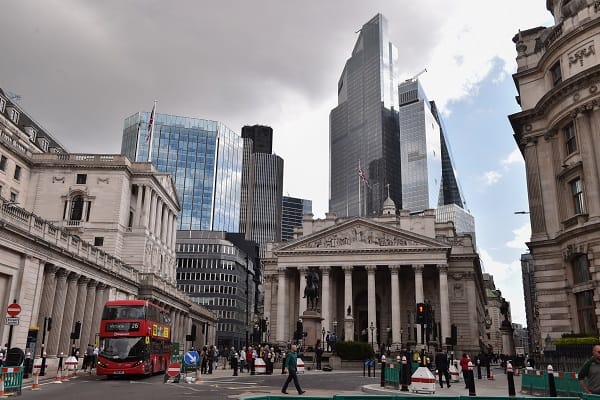
The Governor of the Bank of England has warned that the fallout from the Iran conflict could trigger financial instability on a scale comparable to the 2008 global banking crisis, as tensions ripple through energy markets and riskier corners of the global financial system.
Andrew Bailey said turmoil linked to the conflict could expose vulnerabilities in the rapidly expanding $3 trillion private credit sector, warning that it remains largely untested under severe stress.
Speaking in his capacity as chair of the Financial Stability Board, Bailey said Britain was already facing an “energy shock” and heightened volatility in debt markets, drawing parallels with the conditions that preceded the subprime mortgage collapse.
He cautioned that private credit — lending by non-bank institutions such as hedge funds and investment firms — operates in a “relatively opaque world” with limited regulatory oversight, increasing the risk that problems could spread quickly if confidence falters.
The sector has expanded rapidly in recent years, rising from around $2 trillion in 2020 to $3 trillion today, according to Morgan Stanley, fuelled in part by lighter regulation following the global financial crisis.
Unlike traditional banks, much of the private credit market operates outside the direct supervision of UK and US regulators and relies heavily on institutional investors. This has raised fears that a sudden loss of confidence could trigger rapid withdrawals and forced asset sales.
Concerns have been heightened by recent corporate failures linked to private credit exposure, including distressed US firms such as TriColor and FirstBrands, and the collapse of the UK-based Market Financial Solutions earlier this year.
Jamie Dimon has also warned of hidden risks in the sector, likening potential failures to “cockroaches” that could signal deeper problems and suggesting losses could be “higher than expected.”
Investor sentiment may already be weakening, with reports from the Financial Times suggesting that more than $20 billion has been withdrawn from private credit funds in the first quarter of this year.
Bailey said the risk lies not only in isolated defaults but also in the possibility of contagion across the wider system. “Do you start to lose confidence in the whole thing?” he said, warning that behavioural shifts among investors could amplify shocks, reminiscent of the subprime crisis.
His remarks come as policymakers grapple with the combined impact of geopolitical instability, elevated energy prices and a financial system increasingly reliant on lightly regulated forms of credit.
While he stressed that a crisis is not inevitable, the warning underscores growing concern that multiple stress points — from the Gulf to global debt markets — could interact unpredictably and potentially destabilise.


Leave a Comment