
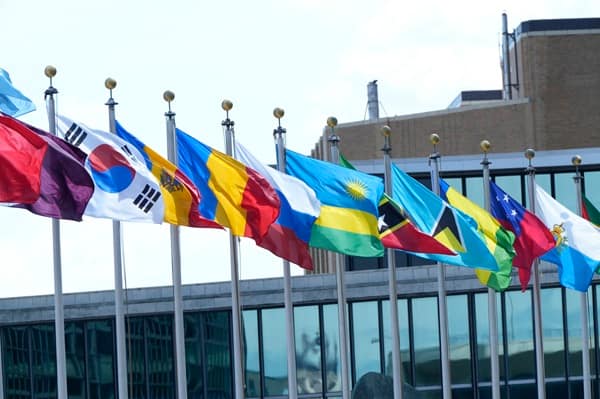
When British diplomats take the stage at the United Nations General Assembly on 9 September, they will do so against a backdrop of mounting tension—both internationally and here at home. Beneath the diplomatic language of peace, progress, and human rights lies a hard truth: Britain’s foreign policy is increasingly being shaped not by strategy, but by mass migration and the changing nature of our domestic population.
Issues like the recognition of a Palestinian state, our stance on Middle Eastern conflicts, and our relationships with authoritarian regimes are no longer discussed solely in war rooms and policy briefings. Instead, they are shaped by protests on the streets of London, pressure from vocal diaspora groups, and a political class that appears more concerned with appeasement than accountability.
Foreign policy by demographics
Britain, like much of Western Europe, is undergoing demographic transformation at an unprecedented scale. Mass migration over the last two decades has not only changed the look and feel of cities like London, Birmingham, and Leicester—it has changed the electoral landscape, the cultural climate, and increasingly, foreign policy priorities.
This isn’t scaremongering—it’s political reality. Decisions once made on the basis of national interest now seem disproportionately influenced by domestic identity politics. This was made plain in the growing debate over the recognition of Palestine as a state—a move that many in government now feel pressured to support, not because of strategic calculations, but because of mounting pressure from groups with strong cultural and familial ties to the region.
Is London safe to visit?
This internal pressure has external consequences—and nowhere is this more visible than in the capital. The once-reassuring answer to the question “is London safe to visit?” has become increasingly complex.
Mass demonstrations, often in support of causes like Palestinian statehood or anti-Israel sentiment, have seen thousands march through central London waving foreign flags, chanting slogans, and in some cases, calling for violence. Meanwhile, police are seen standing by, or worse—actively facilitating these marches.
The discomfort many now feel in the capital city is not only about physical safety. It’s about a deeper unease regarding loyalty, identity, and sovereignty. The question “is London safe to visit?” now carries with it layers of meaning: is it safe from crime? From ideological radicalism? From cultural hostility to the very nation it represents?
The Palestinian question and political theatre
The UN General Assembly is expected to focus heavily on the recognition of Palestinian statehood, with several nations pushing for a formal resolution. The UK’s position has historically been measured, supporting a two-state solution in principle while resisting unilateral moves.
But this year, the mood in Westminster is different. Labour has already signalled support for recognition. Senior Conservatives remain publicly cautious, but private briefings suggest many are considering a change in position—not out of conviction, but out of fear of losing control of inner-city constituencies with large Muslim populations.
Let’s be clear: British foreign policy is being manipulated by the threat of domestic unrest. The sheer scale of recent pro-Palestinian marches—combined with intense online activism and local political organising—has given pressure groups real leverage over the national agenda.
What’s worse, opposing voices are being silenced. Critics of Palestinian recognition, or those who question the intentions behind these street movements, are labelled racists, Islamophobes, or extremists. The debate is not only undemocratic—it’s dangerous.
Real-world consequences of a broken policy
This bending of foreign policy to suit domestic pressure groups has real-world implications. Our credibility on the world stage suffers when our foreign minister’s positions change based on Twitter trends or protest size. Our allies, particularly in the West, are watching—and worrying.
Israel, once considered a reliable and important partner in security and technology, has received an increasingly cold shoulder from UK officials. Meanwhile, we cosy up to regimes that trample on the very values we claim to represent, simply because their domestic supporters are politically organised here.
At the same time, ordinary Britons are growing ever more disconnected from the policies made in their name. A quiet fury is building across the country—not only about who we support abroad, but about who is allowed to shape that support.
Mass migration and the new politics of fear
The reason this shift has gone largely unchallenged is simple: fear. Politicians, journalists, police officers, and civil servants are afraid—afraid of being called bigots, afraid of cancellation, afraid of unrest.
This fear has created a vacuum of courage, where truth is replaced by platitudes, and leadership by cowardice. Those who do speak out are often vilified, whether it’s grassroots protestors, veterans, or backbench MPs.
As a result, mass migration has created a new kind of foreign policy—not shaped by British interests or principles, but by the need to manage an increasingly volatile and fragmented domestic population.
It’s why we can no longer have a serious discussion about border control, integration, or even cultural preservation without hysterical backlash. And it’s why, when planning a visit to the capital, more and more people are quietly asking themselves: is London safe to visit?
Britain at a crossroads
The upcoming UN General Assembly is not just a diplomatic event—it is a mirror reflecting our fractured state at home. Britain must decide whether it will continue down this path of policy by pressure, where mass migration dictates foreign alliances and identity politics overrides national interest.
Or will it return to a foreign policy that puts Britain first, built on clear values, strong borders, and strategic independence?
As we look to the global stage, we must also look inwards. Because if our capital feels alien, our values are ignored, and our policies are written to placate those who do not share our history, then who is truly running the country?
Until we answer that question, many will continue to ask—quietly, urgently, and more often than ever before: Is London safe to visit?


Leave a Comment