
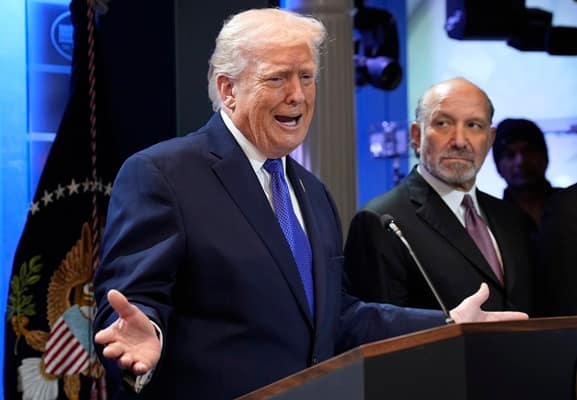
A mixed start in Europe, with the new week bringing fresh tariff rates after the Supreme Court struck down the old IEEPA regime.
This comes at the UK’s particular detriment, eroding the advantage of negotiating against a backdrop of a trade deficit with the US.
For the FTSE 100, the one particular area of strength comes from the miners, with precious metal names Fresnillo and Endeavour leading the way as gold hit a three-week high on Iran and tariff uncertainty.
Whether we start to see fresh tit-for-tat moves from nations such as the UK remains to be seen, but this latest shake-up of global trade no doubt adds a new degree of uncertainty going forward.
Somewhat perversely, while the UK suffers the highest increase in average tariff rate of any country in the world from this latest move, the biggest beneficiaries are the likes of Brazil, China, India, and Canada.
Countries that have specifically been targeted in a bid to level the playing field on trade. No longer does this look like a targeted policy aimed at fixing an unfair system for the US; instead, it is essentially a blanket tax aimed at replicating income from the old tariffs.
This week sees precious few data points of note for traders to sink their teeth into. From an economic perspective, we still have plenty to chew through after a period that saw higher-than-expected core PCE inflation and lower CPI.
Nonetheless, this week will likely focus on Nvidia’s earnings release, as they head up a raft of tech releases that also include the hard-hit software stocks Salesforce and Workforce. For Nvidia, they have been immune to much of the selling pressure seen of late, with the rampant CapEx spending from the hyperscalers expected to keep the gravy train rolling. From the perspective of the software stocks, their earnings are unlikely to protect them from concerns that their businesses will face huge disruption from AI.
Oil prices faded at the open after speculation of a US attack on Iran over the weekend failed to come to fruition. With the US having amassed the largest military force in the Middle East since the 2003 invasion of Iraq, this looks less and less like a veiled threat with no substance behind it. Last week’s claim for Trump that Iran had 10-15 days to strike a deal could be worth very little, as it may be an attempt to provide a false sense of security. Therefore, with a strike possible at any point over the coming weeks, it makes sense to expect oil prices to remain elevated for the time being.
Beyond the question of whether the US does indeed attack, the major implications for energy markets revolve around the goals of the Trump administration. If they seek regime change, we are talking major upheaval and likely a drop-off in crude output for the time being.
However, there is always a chance that Trump pulls off another Venezuela, where he actually does little to help the people of the country and instead instils a US-friendly leadership that gives him preferential oil deals and cuts ties with the likes of China and Russia. With Israel desperately seeking to remove the threat posed by the likes of Hamas and Hezbollah, it seems likely they will push for a more substantial regime change that brings a period of greater instability, uncertainty, and thus higher oil prices.


Leave a Comment