
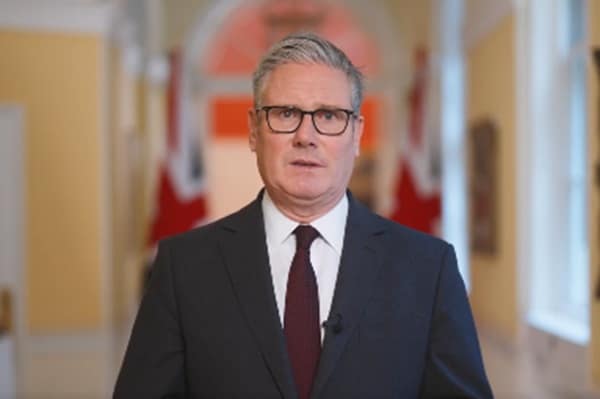
Sir Keir Starmer is facing mounting calls to resign after devastating local election results plunged Labour into crisis and triggered open revolt within his own party.
Early results from Thursday’s elections saw Labour haemorrhage hundreds of councillors and lose control of multiple authorities across England, while Nigel Farage’s Reform UK surged across former Labour heartlands in what senior party figures described as a “nightmare” for the Government.
The scale of the losses has reignited questions about Sir Keir’s leadership less than a year after he entered Downing Street, with Labour MPs openly discussing the possibility of an orderly leadership transition.
As counting continued across England, Wales and Scotland on Friday, Labour insiders warned the party faced further humiliation — particularly in Wales, where Labour is projected to lose the national vote for the first time in more than a century.
In Scotland, the SNP appeared on course to remain the dominant political force despite nearly two decades in power.
The backlash against the Prime Minister intensified overnight as senior Labour figures publicly suggested his position may no longer be sustainable.
Jon Trickett said Sir Keir should already have considered stepping aside following earlier electoral setbacks.
“The pride of one individual cannot be more important than the future of so many communities and community councillors up and down this country,” he told LBC.
“I did call for him to consider his position. He should have done.”
Former shadow chancellor John McDonnell also warned that a leadership change must now be “on the agenda” if Labour’s losses deepen further in Wales and Scotland.
“If it is the nightmare as we are worried it will be, then there should be no precipitous coup,” he said.
“But the leadership question has inevitably to be on the agenda.”
Meanwhile, Jonathan Brash demanded Sir Keir set out a timetable for his departure after what he described as a “terrible” night.
“It’s clear to me that the Prime Minister should take this opportunity to set out a timetable for his own departure,” he said.
“I don’t think Keir Starmer should survive these results.”
The biggest winner of the night appeared to be Reform UK, with Farage celebrating what he called a “historic change in British politics”.
With only a fraction of councils declared by Friday morning, Reform had already gained more than 230 council seats and seized control of Newcastle-under-Lyme from the Conservatives.
“There is no more left-right,” Farage declared as his party made deep inroads into traditional Labour territory.
The Reform leader compared the results to clearing Becher’s Brook in the Grand National.
“If we cleared Becher’s Brook and landed well, we go on to win the Grand National,” he said.
“What is very clear to me is that our voters will stick with us now all the way through.”
The results will intensify fears inside Labour that Reform is emerging not merely as a protest movement, but as a durable electoral force capable of reshaping British politics ahead of the next general election.
Senior ministers sought to calm mounting panic within government ranks, with Deputy Prime Minister David Lammy warning colleagues against playing “pass the parcel” with the leadership.
Labour sources also pointed to previous local election disasters under former prime ministers, including Tony Blair, who lost more than 1,100 councillors in 1999 before securing a landslide re-election two years later.
However, critics within Labour argue that the current political environment is far more volatile, with Reform rapidly consolidating support among disillusioned working-class voters while the Liberal Democrats and Greens continue to advance in urban and suburban areas.
The early results suggest Labour’s coalition may already be fracturing on multiple fronts.
With results still emerging throughout Friday, pressure on Sir Keir is expected to intensify if Labour’s projected losses materialise in Wales and Scotland.
For many within the party, the elections are no longer being viewed as a mid-term protest vote, but as a warning sign that Labour risks losing touch with key parts of its traditional support base less than a year into government.
As Reform gains momentum and internal criticism grows louder, questions that once simmered quietly inside Labour are now being asked openly: not whether Sir Keir faces a leadership crisis — but whether it has already begun.


Leave a Comment