
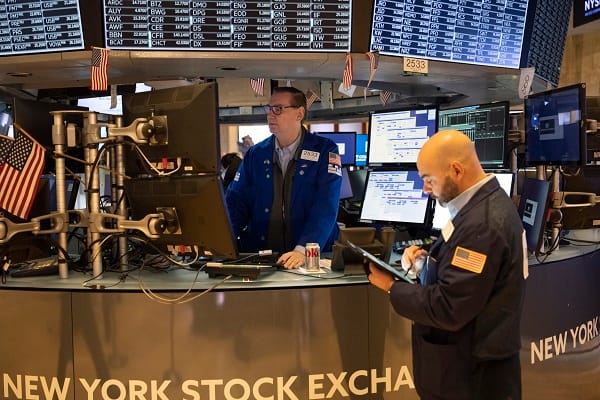
The S&P 500 is experiencing a pivotal moment near the 7,135 level, reflecting an interplay of monetary, sectoral, and geopolitical factors.
The Federal Reserve’s decision to hold interest rates steady signals that the battle against inflation is not yet won, while at the same time, it does not grant markets a clear green light to continue rising without restraint.
In my view, this pause should not be interpreted as explicit support for equities, but rather as a cautious waiting phase that reflects a delicate balance between the risks of economic slowdown and persistent price pressures. This places the index in a real test of the sustainability of the momentum it achieved during the last quarter.
In my assessment, the market’s initial reaction—marked by divergence and caution—is entirely logical.
Investors have come to realise that monetary policy is no longer the sole driver of markets as it was during the era of monetary easing. Today, earnings quality and real growth expectations are the decisive factors. Therefore, the market’s focus on big tech earnings is not merely seasonal tracking, but an attempt to reassess a fundamental assumption: can massive spending on artificial intelligence translate into real cash flows that justify elevated valuations?
From an analytical standpoint, the technology sector currently stands on a fine line between excessive optimism and delayed realism. While major companies have demonstrated notable resilience, increasing signals of slower returns on AI investments raise fundamental questions about the timing of tangible gains. Markets are inherently forward-looking and may have already priced in a significant portion of this expected growth. This makes even a modest disappointment capable of triggering a noticeable correction in the broader index, given the heavy weight of these companies within it.
As for monetary policy, I believe the real challenge lies not in the decision to hold rates, but in the Federal Reserve’s future tone. If the narrative continues to emphasise inflation risks—especially amid rising oil prices—the “higher for longer” scenario will remain dominant. In my view, this scenario creates a natural ceiling for equity gains, as it reprices assets based on a higher cost of capital and reduces the appeal of high valuations, particularly in interest-rate-sensitive sectors like technology.
Geopolitical factors add another layer of complexity. Ongoing tensions and rising oil prices toward elevated levels reinforce inflationary pressures while simultaneously squeezing corporate margins. In my opinion, the market has not yet fully absorbed the medium-term impact of this factor, especially if energy prices remain high. This could affect not only inflation expectations, but also consumer spending and corporate profitability—likely becoming more evident in upcoming quarterly results.
At the same time, it is important to acknowledge that there are genuine support factors for the market, most notably the continued strength of certain U.S. economic indicators and the resilience of the labour market. However, I believe these factors are gradually losing their ability to push markets higher, as they have already been largely priced in. The market now requires new catalysts, not merely the continuation of current conditions. In the absence of such catalysts, a sideways trend—or even a mild correction—appears more likely in the short term.
Based on these considerations, I expect the S&P 500 to move within a volatile range in the coming period, with a slight downward bias if tech earnings fall short of expectations or if the Federal Reserve adopts a more hawkish tone. Nevertheless, I do not foresee a sharp downturn, but rather a healthy rebalancing that recalibrates valuations and creates more sustainable investment opportunities.
In this context, the current phase is neither the end of the bullish trend nor an environment conducive to easy and rapid gains. We are facing a more mature market—one driven by actual data rather than mere expectations—and shaped by a complex intersection of monetary policy, corporate earnings, and geopolitical developments. From this perspective, the prevailing stance leans toward selective caution and a focus on quality and real profitability, rather than chasing momentum. The next phase, in my view, will reward deep analysis more than quick optimism.


Leave a Comment