
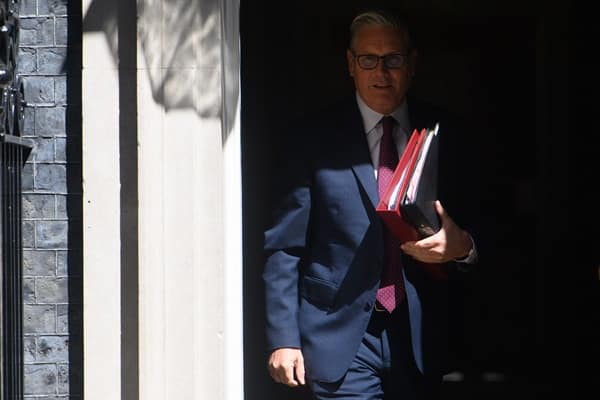
The pound slumped to a one-month low on Thursday night after Andy Burnham dramatically confirmed he would seek a return to Parliament, fuelling fears of a full-scale Labour leadership war and triggering fresh anxiety in the financial markets.
Sterling dropped to around $1.34 shortly after the Greater Manchester Mayor declared he would contest the looming Makerfield by-election, a move widely interpreted in Westminster as the clearest signal yet that he is preparing a leadership challenge against Keir Starmer.
The near one per cent fall marked the pound’s sharpest daily decline in more than three months and underlined growing investor concern that Britain could be heading towards a prolonged period of political instability at the heart of government.
Mr Burnham’s announcement came just minutes after Labour MP Josh Simons said he would step aside to clear a parliamentary route for the Mayor, dramatically accelerating speculation about Labour’s succession battle.
The market reaction was swift.
Investors, already rattled by days of mounting leadership speculation inside Labour, moved sharply against British assets as fears grew that the Government could descend into a damaging internal struggle while the economy remains fragile.
Yields on long-term government bonds had already surged earlier in the week, with 30-year gilts briefly touching their highest levels since 1998 as traders questioned the durability of Sir Keir’s premiership.
Nigel Green, chief executive of deVere Group, warned that markets were increasingly alarmed by the prospect of political paralysis in Downing Street.
“The markets hate uncertainty, but they hate a political vacuum even more,” he said.
“A Cabinet resignation followed by a leadership fight would signal that the Government is losing control of itself while investors are already questioning the country’s fiscal direction.”
Mr Burnham’s allies sought to brush aside concerns from the City, insisting that investors would ultimately adapt to a more interventionist economic agenda under his leadership.
Paula Barker, a Labour MP supportive of the Mayor, said the markets would “have to fall into line” behind policies that “speak to our communities”.
But behind the scenes, many investors appeared deeply unconvinced.
One senior gilt fund manager told the Financial Times that traders were particularly uneasy about Mr Burnham’s previous criticism of Britain being “in hock” to bond markets, comments now being revisited amid fears he could shift Labour towards a more aggressively left-wing economic platform.
According to the paper, six out of 10 fund managers surveyed believed Mr Burnham would provoke the most negative reaction in the bond markets among Labour’s potential leadership contenders.
By contrast, Wes Streeting was viewed as the most reassuring figure for investors, with nine of the 10 managers surveyed identifying him as the most market-friendly candidate.
The political turmoil overshadowed otherwise encouraging economic news released earlier in the day.
Official figures from the Office for National Statistics showed Britain’s economy grew by 0.6 per cent in the first quarter of 2026, while March alone recorded growth of 0.3 per cent despite mounting geopolitical tensions and the continuing fallout from conflict in the Middle East.
Rachel Reeves seized on the figures to issue a blunt warning to Labour MPs contemplating a rebellion against the Prime Minister.
“Now is not the time to put our economic stability at risk,” the Chancellor said in what was widely interpreted as a direct appeal to Labour’s plotting factions.
Despite the turbulence in currency markets, the stronger-than-expected GDP figures helped steady equities by the close of trading.
The FTSE 100 finished 0.5 per cent higher, while the FTSE 250 climbed 1.3 per cent as investors weighed economic resilience against the growing threat of political chaos in Westminster.
For Downing Street, however, the message from the markets was unmistakable.
Investors may still believe Britain’s economy can withstand external shocks.
They are far less certain about whether Labour can survive itself.


Leave a Comment