
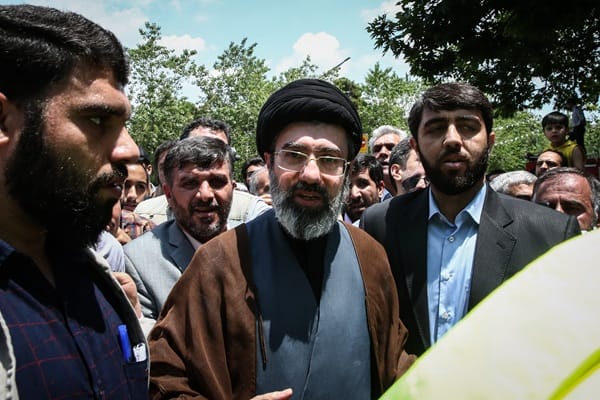
Iran’s newly appointed Supreme Leader, Mojtaba Khamenei, has reportedly sustained injuries in an assassination-style attack that occurred mere hours after he was officially named to succeed his late father, Ayatollah Ali Khamenei.
This startling development has plunged Tehran’s political leadership into chaos amid one of the most critical and turbulent crises in the nation’s recent history.
The state television channel referred to the 56-year-old cleric as “janbaz,” which translates to “wounded by the enemy,” indicating the gravity of the situation.
Concurrently, the Iranian government has branded the escalating conflict as the “Ramadan war,” emphasising its severe and far-reaching implications. Following the death of his father in US-Israeli airstrikes, Mojtaba Khamenei was designated Iran’s third supreme leader by the clerical Assembly of Experts.
Notably, he has not been seen in public since the onset of hostilities, raising concerns about his safety and the stability of the regime.
Details surrounding Mojtaba’s reported injury are limited, as state media provided only scant information.
However, this incident has unfolded while Tehran endures a relentless barrage from US and Israeli military actions, compounded by increasing missile and drone strikes targeting various locations across the Gulf region. Furthermore, the attacks have resulted in significant disruptions to Iran’s energy infrastructure, exacerbating the current turmoil.
Mojtaba has historically been a powerful figure operating behind the scenes, with deep-rooted ties to the hard-line Islamic Revolutionary Guard Corps (IRGC). His ascension to the highest leadership position in Iran represents a significant departure from the traditional merit-based leadership transitions, marking an unprecedented hereditary-style succession within Iran’s theocratic system. This move runs contrary to decades of ideological resistance against dynastic leadership, raising alarms among analysts and experts.
The implications of Mojtaba’s reported injury extend beyond personal safety; many analysts suggest that if confirmed, it could further complicate the leadership crisis gripping the Islamic Republic. This is particularly alarming given that Tehran is presently facing not only intense external pressure from foreign adversaries but also considerable internal dissent and instability.
The international response to Mojtaba’s elevation as supreme leader has been swift and severe. Western officials have expressed deep concern, with former US President Donald Trump publicly critiquing the appointment, asserting that Iran’s new leader “is not going to last long without US approval.” Additionally, Israeli officials have issued threats targeting anyone who might attempt to follow in the footsteps of the recently assassinated Ayatollah, reinforcing the precariousness of Iran’s position on the global stage.
The reported wounding of Mojtaba Khamenei underscores the significant risks inherent in this devastating conflict, which was ignited by his father’s assassination. The ongoing violence and turmoil are now threatening to unravel the very foundations of Iran’s political order, elevating the stakes in a nation already struggling with profound internal and external challenges.


Leave a Comment