
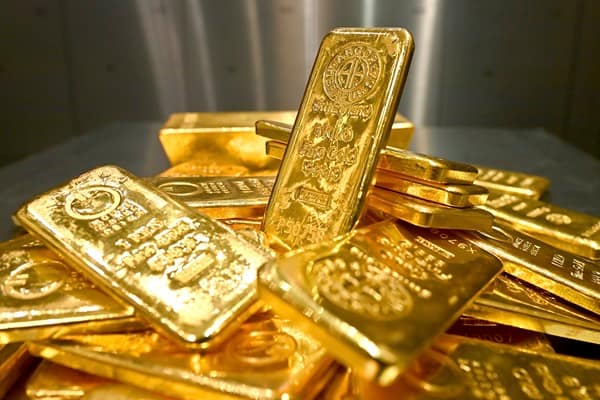
Gold prices are recovering some of their recent losses today, rising 0.67% to $4,554.10. This follows a 2% decline during yesterday’s trading session.
Gold is under multiple downward pressures due to the protracted war in the Middle East. T
his is not only because it increases the risk that interest rates and bond yields will remain higher for longer, but also because it dries up many vital channels of demand for precious metal, particularly from consumers worldwide.
The conflict has entered a dangerous new phase as the U.S. and Iran resort to military force to break a month-long standoff in the Strait of Hormuz.
Following President Trump’s “Project Freedom” initiative to escort stranded vessels, the U.S. Navy used Apache helicopters to sink several Iranian fast-attack craft harassing maritime traffic. In retaliation, the IRGC deployed cruise missiles and drones, striking commercial tankers and a critical oil hub in the United Arab Emirates, according to the Wall Street Journal.
This escalation marks the end of the early April ceasefire, with former Navy official Bryan Clark comparing the current combat to the 1980s “Tanker War”. While U.S. Central Command head Adm. Brad Cooper warned that interference would be met with forceful reactions, Iran’s Revolutionary Guard maintains that any vessel transiting without their permission faces “serious risks” and will be stopped by force. With 20% of global oil exports at stake, this shift toward open naval warfare threatens to further destabilise energy markets and deepen U.S. involvement in the conflict. Meanwhile, shippers doubted that anything less would be sufficient to guarantee the safe passage of hundreds of stranded vessels, according to the Journal.
Furthermore, with hostilities renewed, WTI futures prices surged approximately 5%, and ICE Brent by 6%, amid the naval re-escalation and Iran’s attack on a major UAE oil port, which was ablaze and struck several vessels.
This would return the situation to its baseline, shifting the focus from the prospect of a comprehensive truce to the potential scale of damage across regional energy infrastructure.
This protracted war, coupled with concerns about deepening the chronic structural damage to oil and gas supplies, is extinguishing any hope of an interest rate cut this year. Moreover, the narrative that we might see an interest rate hike before the end of the year has grown stronger, and the market has begun hedging against it.
According to the CME FedWatch Tool data, there is a 26.8% chance of a 25-bp rate hike before year’s end, with only about a 6% chance of a rate cut.
To make matters worse, this wartime environment appears to have significantly dampened global consumer demand for gold. According to the World Gold Council, total gold demand declined 10.13% in the first quarter of 2026 compared to Q4 2025. This decline was largely driven by a sharp contraction in jewellery consumption, which plummeted from 437 tonnes in the final quarter of 2025 to 299.7 tonnes in Q1 2026, a 31.41% quarter-over-quarter decrease. Similarly, investment in ETFs and similar products fell sharply by 64.55% to 62 tonnes, down from 174.9 tonnes in the previous period.
Beyond these sectors, the broader market showed mixed results, though total investment demand overall fell 11.17%. Technology demand remained relatively stable, with a marginal 0.61% decline to 81.6 tonnes. While these areas saw weakness, there were pockets of growth; demand from central banks and other institutions rose 17.35% to 243.7 tonnes, and total bar and coin investment increased 10.66%, primarily supported by a 20.% surge in gold bar purchases.
Regarding jewellery demand, the United States experienced the sharpest drop, at 64%, to 13.1 tonnes. India followed with a 55% decrease, sliding from 145.3 to 66.1 tonnes. In the Gulf region, demand in the UAE and Kuwait fell 37% and 35%, respectively. Turkey also recorded an 11% dip. Conversely, Saudi Arabia bucked the trend, posting a 41% increase in demand.
The noticeable decline in consumer demand is driven by several potential factors, including a decrease in purchasing power due to the depreciation of the local currency, as in the case of India, or a preference for cash, as seen in the Gulf Cooperation Council (GCC) countries, whose currencies were not affected due to their peg to the dollar. This, in turn, dictates that a prolonged war in the Middle East will not restore gold’s “safe haven” status. On the contrary, it may exacerbate downward pressures on it.
Furthermore, the collapse in gold prices earlier this year, particularly in January, likely made individuals more aware of gold’s speculative nature.
This decline in gold demand appears to be extending into the second quarter as well. Last week, we saw significant net outflows from physical gold funds, most notably from the largest, SPDR Gold Shares (GLD), which recorded outflows of over $1.6 billion.


Leave a Comment