
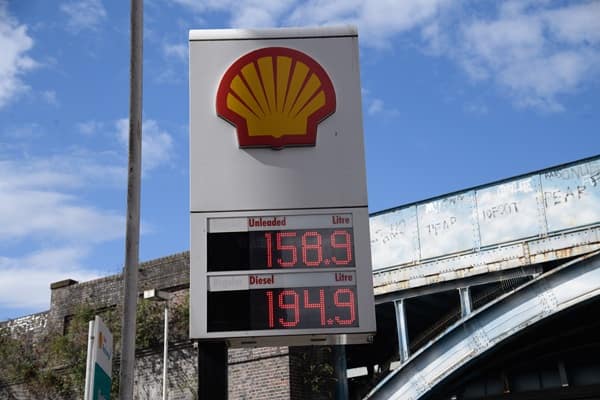
Rising fuel costs are squeezing British motorists to the point where many are cutting back on driving, reducing household spending, and rethinking how they travel, according to new research highlighting the growing pressure on family finances.
A survey of 2,000 petrol and diesel drivers, commissioned by temporary car insurance provider Tempcover, found that motorists are now paying significantly more to fill their tanks than before the latest price surge in March 2026. On average, drivers say they are spending £18.20 more per fill-up, rising to £23.10 for diesel users.
With 88 per cent of respondents expressing concern about continued increases at the pumps, the findings point to mounting frustration among households already grappling with wider cost pressures.
The squeeze is already reshaping behaviour on Britain’s roads. Nearly half of drivers (44 per cent) say they are now driving less as a direct result of higher fuel prices, while others are changing how and when they travel to limit costs.
Reducing non-essential journeys has become the most common adjustment, cited by 62 per cent of respondents. A further 39 per cent say they are walking or cycling more frequently, while 26 per cent are using public transport more often.
Drivers are also consolidating trips, with a third combining errands into single journeys and another third reducing long-distance travel. A similar proportion say they are planning routes more carefully in an effort to cut mileage.
The financial pressure is also filtering into household budgets. Nearly half of those surveyed (49 per cent) said they have reduced spending in at least one area of daily life in order to afford fuel. Eating out and takeaways have been cut by 28 per cent, while 23 per cent have reduced clothing and non-essential shopping. A fifth have scaled back social activities such as nights out and hobbies.
More concerning for some households, 12 per cent say they have reduced grocery spending, while 13 per cent have dipped into savings or investments to manage rising costs.
Fuel purchasing habits are also shifting. More than a quarter of motorists are now actively monitoring fuel consumption, while one in five delay refuelling until it is absolutely necessary. A similar proportion are seeking out cheaper forecourts, and 17 per cent are taking steps to improve efficiency, such as checking tyre pressure or reducing vehicle weight.
Price comparison apps are also gaining traction, with 14 per cent of drivers now using digital tools to identify cheaper fuel nearby.
The survey suggests that sustained price pressure may also be accelerating the UK’s transition away from petrol and diesel. Nearly a quarter of respondents (24 per cent) say they are now more likely to switch to an electric vehicle if fuel prices remain high, while 28 per cent are considering a hybrid as their next purchase.
That shift comes against a backdrop of rising EV adoption, with the UK marking a milestone in April 2026 when the two-millionth fully electric car entered use.
Despite growing financial strain, however, car ownership remains deeply embedded in everyday life. Just 9 per cent of respondents said they would consider giving up their vehicle altogether, compared with 44 per cent who said they would definitely not.
For ministers, the findings underline a familiar political dilemma: how to balance the push towards net zero and cleaner transport with the immediate cost pressures facing millions of households dependent on the car for work, childcare and daily life.
For now, rising fuel prices are not just shaping transport choices — they are quietly reshaping household budgets across the country.
Claire Wills-Mckissick, temporary car insurance expert at Tempcover added: “Rising fuel prices are putting real pressure on household budgets, leading many drivers to change every day behaviour behind the wheel.
“We’re seeing a shift towards more conscious driving – combining journeys or cutting back where they can to help manage the cost of getting from A to B.
“In this climate, flexibility is key and drivers are increasingly looking for ways to make their money go further. This includes using comparison sites to track down the cheapest fuel prices nearby or more competitive rates.
“Other options, such as temporary car insurance, also enable motorists to adapt to these changing circumstances, whether that’s sharing the driving on long trips, borrowing a car when needed, or adding flexible cover for occasional use. It’s about making every mile, and every pound, count.”


Leave a Comment