
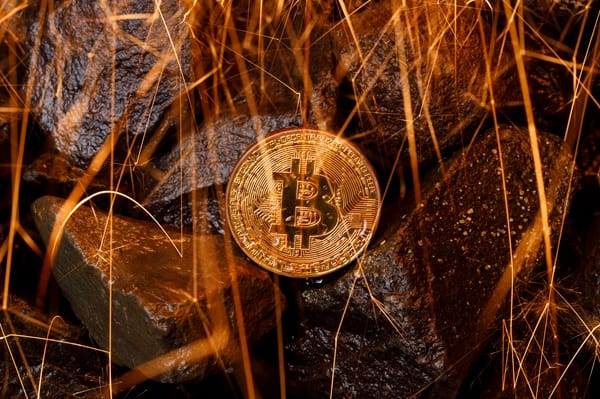
Bitcoin has slumped for a fifth consecutive day, retreating from its highest levels since November while struggling to maintain footing above $92,000.
Bitcoin downtrend is driven by a mix of profit-taking and a “risk-off” pivot as traders digest a sudden spike in US political risk and geopolitical and trade tension.
Despite recent market fluctuations, damage remains contained as futures liquidations stay at a minimum, signalling a shift toward stability.
On the positive side, real demand is resurfacing; according to SoSoValue data, U.S. spot ETFs recorded their best week of net inflows since October, following the massive $20 billion futures liquidation wave on October 10th.
This institutional interest is mirrored by some notable whale activity, with addresses holding 1,000 to 10,000 BTC increasing by 28 over the past week according to BGeometrics. Furthermore, CoinGlass reports that crypto market futures open interest has declined by $9 billion from its January high of $147 billion, suggesting that the current upward price pressure is driven by genuine spot demand rather than speculative leveraged positions.
However, a set of renewed risk-off factors is preventing the bitcoin price from recovering even more.
The political headache stems from a criminal investigation into Fed Chair Jerome Powell, which has effectively paralyzed the central bank’s leadership transition. According to Wall Street Journal reports, the probe is creating a credibility trap where any Trump nominee risks being viewed as a political instrument rather than an independent technocrat.
This institutional friction has immediate consequences for market sentiment, as uncertainty regarding the Fed’s autonomy typically triggers a flight from dollar-denominated assets.
Senators Thom Tillis and Lisa Murkowski have already stalled the confirmation process, suggesting that a leaderless or politicized Fed could leave the markets steering without a rudder through the spring.
The drama is further complicated by the “Two Kevins” of Warsh and Hassett who represent the diverging paths for the Fed’s future. While Kevin Hassett’s proximity to the White House was once a strength, it is now a liability; as Janet Yellen notes, a nominee’s credibility is undermined when they are perceived as being pre-selected to rubber-stamp executive demands.
The resulting erosion of trust in the “dollar standard” is creating a strategic vacuum that Beijing is eager to fill. As economist Bert Hofman points out, undermining the Fed’s independence makes holding the greenback a less attractive safety play, potentially accelerating the global migration toward the yuan.
For the crypto markets, this “politicized dollar” narrative serves as a long-term bull case, even if current prices are dipping. If investors lose faith in U.S. government debt and the Fed’s autonomy, decentralized assets like Bitcoin and “hard” assets like gold, which has already seen skyrocketing prices, become the logical hedge against institutional decay.
Meanwhile, a new front has opened in the Atlantic as Europe braces for a trade war triggered by President Trump’s ambitions for Greenland. The EU is currently weighing its “bazooka”, a never-before-used anti-coercion tool, which could result in retaliatory tariffs on $100 billion of American goods and a freeze on defense cooperation according to The Journal.
Even if the takeover of Greenland would not have been a geopolitical shock enough to shake the market, Trump recklessly insisted on making it so. US stock futures opened significantly lower today.
This geopolitical friction adds a layer of complexity to the upcoming week, as the market turns its attention to the U.S. PCE inflation data and the World Economic Forum in Davos. Solid inflation figures could definitively “put the lid” on hopes for a near-term rate cut, forcing a repricing of bonds and equities alike.
Across the Pacific, the Bank of Japan remains a wild card that could turn the global carry trade upside down if they deviate from their expected hold at 0.75%. Any surprise hawkishness from Tokyo or intervention to save the yen would likely trigger a massive liquidity squeeze, sending tremors through Western markets already on edge.
Ultimately, we see a shift from “market fundamentals” to “geopolitical theater” as the primary driver of price action. As Ray Attrill of National Australia Bank warns, the loss of Fed autonomy could very well sow the seeds for the demise of dollar dominance, a scenario that would permanently redefine the global financial hierarchy.


Leave a Comment