
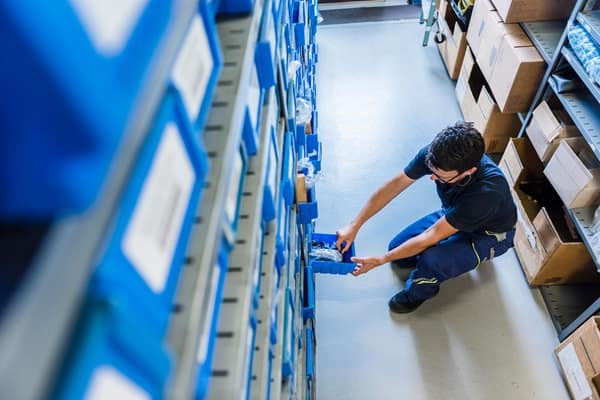
Running a warehouse is not about moving boxes; it’s all about knowing exactly where everything is at all times without having to second-guess and ways to save time.
This is exactly where labelling comes in.
You may think that labels are small details, but when they are done right, they shape how your entire operation runs. When they are done really poorly, they are going to slow everything down and make it difficult.
Let’s have a look at why it still matters and how you can make sure that you are getting it right.
Small labels, Big impact
Every warehouse has pressure points; things like picking errors, delayed shipments, or misplaced stock can wreak havoc. Most of these issues don’t start with your systems; they actually start on the floor.
Clear labels help to remove hesitation, and your team doesn’t need to stop and think; they are able to move around with confidence because the information is right in front of them.
This has an impact on things like picking speed, accuracy, and training time for new staff. When your layout and labels work together, your warehouse is something that feels organized rather than chaotic.
Here’s the thing: even a strong warehouse system can fall apart if little things like the physical labelling don’t match it.
Consistency beats complexity
You don’t need to have complicated labels in order for them to work; what you need is to make sure you have consistent ones.
A simple format used across every single aisle, shelf, and bin makes it much easier than having to add loads of information.
Think about how your team reads the labels during a busy shift; they’re not looking at them to analyse them, they’re trying to scan them so that they can do their job nicely and quickly. Make sure you use clear, readable fonts, keep formats consistent across stores, and avoid unnecessary codes or clutter.
You should also make sure that any labels stay readable over time. If they’re damaged or they’re faded, it can create confusion.
If you are reviewing your setup, it’s worth looking at how your current warehouse labels are performing in real conditions rather than just on paper.
Reducing errors without adding pressure
Mistakes happen when people feel that they are rushed or are unsure. Labels can help to reduce both of these.
When locations are clearly marked, your teams don’t need to double-check; they can trust exactly what they see, and that leads to fewer picking errors and also fewer returns.
It’s also something that helps supervisors. Instead of constantly correcting mistakes, they can focus on improving workflow. You’re not adding pressure to your team; you are removing the friction.
Conclusion
Warehouse efficiency isn’t only about software or automation; it is also built on some of the simple basics.
Having clear, consistent labelling means that you’re going to be able to keep your operations steady. It helps to reduce errors, speeds up work, and makes training much easier.
If your warehouse feels harder to manage than it should, don’t start with a complete overhaul. Start with things like your labels; fix those, and a lot of problems get a lot easier to solve.


Leave a Comment