
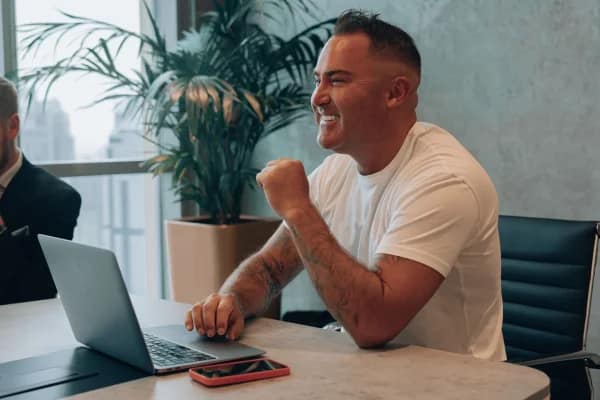
While many chase reach, Matt Haycox focuses on results. British entrepreneur and host of the hit podcast No Bollocks with Matt Haycox, has built his career by funding, mentoring, and scaling founder-led businesses across the UK. Having experienced both boom and bankruptcy, he speaks from the lived reality of turning setbacks into sustainable ventures. His view is blunt: 2026 will belong to operators who run cash-generative businesses, not personalities optimised for impressions.
That stance comes from dealflow, boardrooms and portfolio oversight, not theory. Through The Matt Haycox Group, he has backed founders across services, fintech and e‑commerce, and he continues to advise teams facing tighter budgets and volatile feeds. His commentary aligns with what founders, lenders and advertisers are signalling for the year ahead.
Market reality favours operators in 2026
Haycox points to a pivot toward measurable unit economics as budgets compress and investor scrutiny intensifies. In his experience, brands are prioritising profitability over profile. Founders who understand contribution margin, inventory turns and cohort behaviour are securing durable growth, while those dependent on algorithmic reach are seeing volatile demand and fragile forecasts.
He notes that operators who own supply, margins and customer relationships are pulling ahead. Rising acquisition costs and stricter attribution guardrails have exposed the gap between visibility and viable growth. Having built a diversified portfolio spanning wealth management, property, digital marketing and leisure, he argues 2026 rewards boring excellence: logistics, retention, pricing discipline and cash flow literacy.
Capital is backing disciplined operators again
According to Haycox, lenders and investors are tightening screens around runway, payback periods and collateral. Debt is flowing to predictable revenue models; equity is reserved for teams with repeatable execution. He reports faster closes at cleaner terms where founders evidence gross margin control and monthly cohort retention, supported by credible board reporting.
He adds that governance is back in fashion as rates and risk appetite normalise. Through The Matt Haycox Group, he has provided advisory support and funding for fintech and service startups that treat cash as a product. He also launched MHG Wealth to help entrepreneurs manage and grow assets with rigour, a signal that stewardship now matters as much as story.
Signals from funding markets
- Sharper diligence on marketing efficiency as cookie deprecation bites and attribution degrades across channels.
- Preference for low-burn, cash-generative models rather than audience-led brand plays without margin logic.
- Consolidation backing where synergies are provable and cost take-outs are transparent and near-term.
Influencer reach no longer converts reliably
Brand teams are consolidating budgets toward channels with provable revenue contribution, Haycox observes. Experimental influencer spend has been pared back amid feed changes, brand-safety pauses and CPM volatility. He sees a widening split: creators who also own product, data and distribution can withstand scrutiny; pure sponsorship models face shrinking briefs.
His view is pragmatic: 2026 briefs will move from awareness at scale to sales with accountability. Even with No Bollocks with Matt Haycox surpassing 1,000,000 podcast downloads, he stresses that reach must tie to payback, not vanity metrics. For operators, partnerships will be judged on LTV/CAC and margin impact, not follower counts.
What it means for creators
- Creators with direct commerce, inventory control or B2B propositions will better weather budget scrutiny.
- Audience-alone pitches will face requests for margin logic and purchase attribution, not just engagement slides.
- Hybrid operator-creators can win by proving unit economics, retention curves and profitable acquisition.
AI is commoditising top-of-funnel content fast
Haycox argues AI has lowered the cost of average content, saturating feeds and pushing value downstream into product, service and fulfilment. As content volume rises, CTRs and CPM efficiency compress, making operational capability the decisive edge. Algorithmic reach is a weak moat when competitors can copy formats and velocity.
He sees an advantage accruing to founders who deploy AI beyond content, especially when it comes to forecasting, customer service triage, pricing and working capital planning. Those operators widen margins without sacrificing experience. In his view, proprietary data, process excellence and disciplined execution will differentiate more than creative novelty as large-language models level the playing field.
Haycox’s lens on viable 2026 ventures
For 2026, Haycox is prioritising recurring revenue, defensible margins and controllable distribution over personality-led plays. He favours specialist services, B2B enablement and niche e‑commerce with owned audiences where operational gains compound. Audience leverage is welcome when it accelerates conversion, but it doesn’t substitute for a robust operating model.
Founders who demonstrate weekly cash discipline, pricing power and a credible path to net profit within 12-18 months are moving to the front of the queue. His portfolio approach reflects that bias, from MHG Wealth’s structured asset stewardship to hands-on guidance for service businesses.
The bigger picture
Haycox frames 2026 as a reset to fundamentals: real entrepreneurs win by shipping products, serving customers and managing cash under scrutiny. Influence remains useful only when it drives measurable outcomes. Operators who prove unit economics, governance and delivery will set the pace, which is a shift he considers healthy for founders, funders and the market alike.


Leave a Comment