
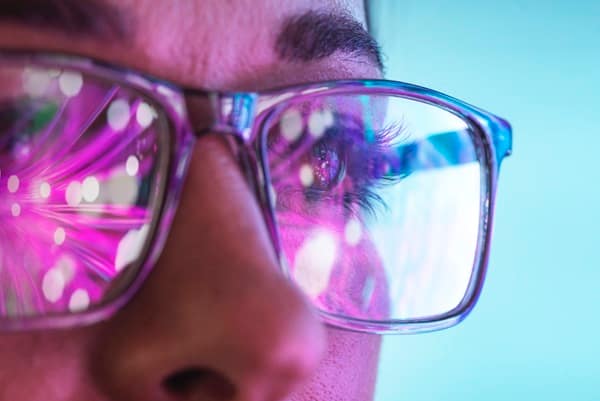
Remember the days when wearing glasses meant constantly pushing them up your nose, enduring painful pressure points, or worrying that a simple drop would snap your frames in half? For many, this was the uncomfortable reality of vision correction. Today, however, that narrative is quickly becoming history.
Thanks to truly incredible advances in material science, biomedical engineering, and integrated technology, modern eyewear has transcended its role as a mere medical necessity. It is now a sophisticated piece of personal gear, designed not just to fix blurry vision, but to seamlessly integrate into and enhance our comfortable, durable, and highly functional lives.
This transformation is a testament to how smart design is fundamentally reshaping the glasses we wear every day.
Say goodbye to discomfort: Engineering the perfect fit and feel
The era of heavy, one-size-fits-all frames is over. The pursuit of all-day wearability has made comfort the single most critical engineering challenge. This has led to the adoption of advanced materials that are as revolutionary as they are light.
Engineers are now masters of alloys and polymers, favouring featherlight titanium for its incredible strength-to-weight ratio, making glasses feel almost non-existent on the face. Beyond lightness, we now have ‘memory metals,’ such as Nitinol, which are nickel-titanium alloys.
These materials possess a super-elastic property, allowing a frame to be bent, twisted, or nearly flattened only to spring back into its original shape. This flexibility eliminates the frustration of constantly adjusting warped frames and drastically improves their lifespan.
More than that, the focus has shifted from standard frame sizes to precise, customised ergonomics. Simple yet impactful engineering adjustments—like self-adjusting spring hinges, textured nose pads made of soft, hypoallergenic silicone, and earpieces with adjustable core wires—allow the user to achieve a fit that feels, quite literally, custom-made.
This meticulous attention to contact points—the bridge of the nose, the area behind the ears—ensures pressure is distributed evenly, eliminating the irritating anchor-like feeling of older, rigid designs. The result is a pair of glasses that you can genuinely wear from the moment you wake up until the moment you sleep, allowing you to focus on reading a book, navigating a busy commute, or going for a run without a second thought.
Tougher than ever: The triumph of durability and protection
Let’s be honest: accidents are an inevitable part of life. A misplaced desk item, a quick removal with one hand, or a simple fall used to be a potential death sentence for a pair of glasses. Modern engineering has responded to this reality by making eyewear incredibly resilient. The durability story is two-fold: the frames and the lenses.
For the lenses, the concept of “built-in armor” is now standard. Advanced lens materials, like polycarbonate and Trivex, are inherently impact-resistant, making them an excellent choice for children and active adults.
More importantly, they are fortified with multi-layer coatings. Anti-scratch coatings, often a ceramic-based film, significantly extend the life and clarity of the lens.
Anti-glare (or Anti-Reflective, AR) coatings are meticulously engineered to reduce reflections from both the front and back surfaces, improving visual clarity and reducing eye strain, which is crucial in an age dominated by screens. Critically, these coatings universally include advanced UV protection, blocking harmful ultraviolet rays that can lead to long-term eye health issues.
The frames are now built using robust high-performance polymers and flexible alloys that are designed to absorb and dissipate impact energy. These materials undergo special heating and moulding processes that cure the frame, giving it a stable ‘memory’ to resist warping and distortion over time.
This push towards engineering resilience means that a pair of modern glasses is not just an investment in vision but a long-term piece of equipment built to handle the bumps and drops of daily life without falling apart.
Your glasses are getting smarter: From vision aid to integrated tech
This is arguably the most exciting frontier: the transition of traditional eyewear into smart technology. Engineers are seamlessly embedding sophisticated electronics into the lightweight, minimalist form of a glasses frame.
The potential is vast. Imagine frames that can do much more than correct your vision—they can act as a personal assistant, providing turn-by-turn directions, allowing you to take a private call, or even managing your music playback—all hands-free.
Early innovators like Google Glass and newer contenders like the Vuzix Blade have demonstrated the power of Heads-Up Display (HUD) technology, which projects real-time, contextually relevant information directly into your line of sight. This allows users to remain focused on the world around them while still accessing data.
Beyond external information, the focus is now on health and wellness monitoring. Engineering challenges revolve around miniaturising sensors—like accelerometers, gyroscopes, and heart rate monitors—and embedding them directly into the frame’s temples.
These sensors can discreetly track activity levels, measure heart rate variability, monitor sleep patterns, and even gauge eye-movement patterns to detect fatigue or concentration levels. This creates an unparalleled, continuous stream of personalised health data without requiring the user to wear an intrusive or secondary device.
Truly your own: Personalisation as the new standard
The era of “one-size-fits-all” is unequivocally over. Today’s glasses can be as unique as the person wearing them, thanks to massive leaps in manufacturing and lens technology. The key enabler for frame customisation is 3D printing (or additive manufacturing).
This technology allows eyewear companies to create custom frames that perfectly match the contours of a person’s face. By using facial scanning technology, engineers can generate a digital blueprint that results in a frame with a perfect, pressure-free fit over the nose bridge and around the ears, optimising both comfort and visual alignment. This level of customisation ensures the ultimate fit and style.
The lenses, too, are becoming increasingly adaptive. Given the modern user’s exposure to screens, lenses with specialised blue light filters are engineered to block or absorb high-energy visible (HEV) light, helping to protect eyes from potential strain and disruption of sleep patterns.
Photochromic lenses represent another engineering marvel, utilising molecules that react to UV light, causing the lenses to automatically darken in the sun and clear up indoors. This eliminates the need to constantly switch between prescription glasses and sunglasses.
Similarly, multifocal contact lenses have revolutionised the way we approach vision correction. These lenses offer a seamless solution for those with presbyopia, enabling wearers to see clearly at various distances—whether near, intermediate, or far—without the need for reading glasses or multiple pairs of lenses. Just like their counterparts in eyewear, they blend convenience and technology, giving people a more comfortable, all-in-one vision experience.
Whether it’s the precise fit of a 3D-printed frame or the adaptive nature of its lenses, modern eyewear is about ensuring the product looks great and works perfectly for your specific needs.
Good for you, good for the planet: The rise of sustainable eyewear engineering
As global consciousness shifts toward environmental responsibility, the eyewear industry is proactively stepping up to the challenge. Engineers are dedicating their efforts to finding ways to utilise eco-friendly materials and implement sustainable production methods. It is becoming increasingly common to find frames made from innovative materials such as recycled plastic, salvaged fishing nets, lightweight bamboo, or other plant-based polymers derived from materials like castor oil.
This shift involves not just the material composition but also the entire supply chain, emphasising ethical sourcing and minimising waste. This engineering commitment to sustainable production means that a consumer’s next pair of glasses can help them see clearly while also being a small, but meaningful, win for the planet.
Final thoughts
The continuous, often unseen, push of engineering is what has delivered us to this exciting moment in eyewear design. We now have glasses that are lighter, more comfortable, significantly tougher, remarkably smarter, and more personalised than we ever thought possible.
The future of eyewear is no longer solely about achieving clear vision; it is about providing a highly engineered, comfortable, and intelligent layer that enhances the way we experience and interact with the world around us.



Leave a Comment