
If you own a property in London, you have almost certainly thought about your EPC rating in the past twelve months. Mortgage lenders are paying closer attention to energy performance. Tenants are factoring running costs into rental decisions. And with the government signalling stricter minimum EPC thresholds for rented properties, a poor rating is no longer just a line on a certificate — it is a financial liability.
Yet many homeowners overlook one of the most impactful upgrades available to them: their windows. Heat loss through windows accounts for a significant proportion of a home’s total energy waste. Replacing single-glazed or aging double-glazed units with modern, thermally efficient windows can shift an EPC rating by one or even two bands — and that shift translates directly into property value.
Why windows matter more than you think
An EPC assessment scores a property from A (most efficient) to G (least efficient). Windows affect that score through their glazing type, frame material, seal quality, and how well they reduce thermal bridging between inside and outside.
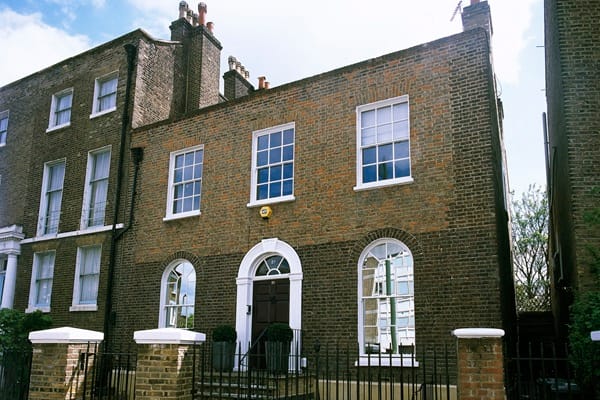
Older properties across London — Victorian terraces in Hackney, Edwardian semis in Ealing, postwar flats in Lewisham — frequently still have original single-glazed windows or early double-glazed units from the 1990s that are well past their effective lifespan. Replacing these with modern double or triple-glazed windows with low-emissivity coatings can make a measurable difference to both the EPC score and the monthly energy bill.
The frame material plays a bigger role than most people realise. Timber is a natural thermal insulator. Unlike aluminium, which conducts heat rapidly and requires a thermal break to perform adequately, a well-engineered timber frame provides insulation as an inherent property of the material itself. This gives timber windows a thermal advantage that shows up directly in U-value calculations — the measure assessors use to determine how much heat passes through a building element.
Timber’s quiet advantage
For London homeowners weighing EPC performance alongside aesthetics, planning compliance, and long-term value, timber deserves serious consideration. Modern engineered timber frames are laminated from multiple layers for dimensional stability, meaning they resist warping far better than the solid softwood frames of previous decades. A well-specified double-glazed timber window can deliver U-values around 1.4 W/m²K, with triple-glazed options pushing below 1.0 W/m²K — comfortably meeting Part L Building Regulations.
Timber also brings two advantages unique to the London market. First, it is the only frame material widely accepted by local planning authorities in conservation areas — and London has over 1,000 of them, covering boroughs from Camden and Islington to Greenwich and Richmond. If you need to replace windows in a conservation area, timber is often not just the best option — it is the only approved one.
Second, timber ages well. A properly finished hardwood frame has a lifespan of 60 years or more, developing warmth and character that synthetic materials cannot replicate. For buyers, that quality signals a well-maintained, thoughtfully upgraded property.
UK-based specialists like Wooden Windows Online supply made-to-measure timber windows in engineered pine, meranti, and oak — including flush casement and sash profiles suitable for both period and contemporary properties. For homeowners sourcing energy-efficient windows that also meet conservation area requirements, this kind of bespoke manufacturing offers a practical route forward.
The value equation
Improving a property’s EPC rating has a direct financial payoff. Research from the Department for Energy Security and Net Zero has consistently shown that homes with higher ratings command price premiums. In London’s competitive market, the difference between a D and a C rating can influence both the speed of sale and the final offer.
New windows also improve kerb appeal, reduce street noise — a significant factor in urban London — and signal to prospective buyers that the property has been maintained to a high standard. For buy-to-let investors, the calculus is equally clear: the government’s direction of travel points toward a minimum EPC C for rental properties. Landlords who upgrade now avoid the rush and begin recouping the investment through stronger tenant demand immediately.
What to consider before you start
If your property is in a conservation area, check with your local planning authority before committing to any material or style — requirements vary by borough. Make sure any new windows carry a FENSA certificate confirming compliance with Building Regulations, and ask your supplier for certified U-values so you can estimate the likely impact on your rating before you commit.
On budget, timber sits above uPVC but below high-end aluminium systems. The difference in upfront cost is often offset by longer lifespan, lower maintenance, and the EPC and valuation benefits outlined above. For properties where planning rules mandate timber, the comparison is largely academic.
A smart upgrade for the London market
In a city where property values are measured in thousands per square foot and energy costs show no sign of retreating, the choice of window is a strategic decision. The right windows improve your EPC rating, reduce running costs, satisfy planning requirements, and add tangible value at resale.
For London homeowners thinking about where to direct their next improvement budget, the evidence points in a clear direction. Start with the windows.



Leave a Comment