
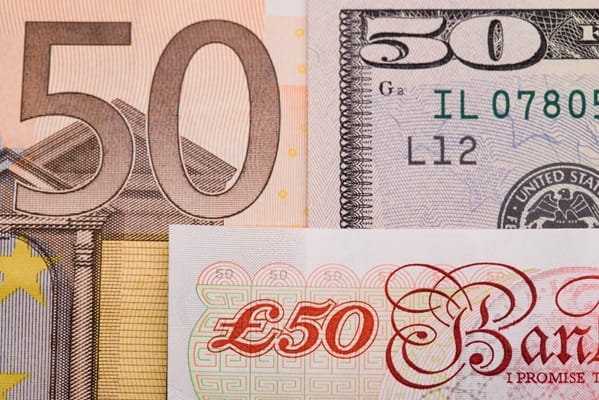
The GBP/USD pair is entering a pivotal phase that could shape its trajectory throughout the second half of 2026, as complex monetary, economic, and political forces converge across the global landscape.
Despite the Bank of England’s decision to leave interest rates unchanged at 3.75%, the market’s reaction toward the British pound was notably negative.
This suggests that investors are increasingly viewing the global outlook through a different lens, one in which U.S. Federal Reserve policy has become the dominant force driving major currency valuations, outweighing the influence of domestic monetary decisions elsewhere.
In my view, the recent weakness in sterling is less a reflection of domestic fragility and more a consequence of renewed strength in the U.S. dollar.
Markets paid far greater attention to the Federal Reserve’s hawkish message than to the Bank of England’s decision to hold rates steady.
When nine members of the Federal Open Market Committee project at least one rate hike during 2026, the message becomes clear: the battle against inflation is not yet over, and the Federal Reserve is in no rush to pivot toward a more accommodative stance. This shift has prompted investors to reprice their expectations for U.S. interest rates, providing direct support for the dollar.
What further strengthens the U.S. outlook, in my opinion, is the resilience of the American economy despite elevated borrowing costs. Recent labour market data showed a decline in jobless claims and continued stability in employment conditions, while inflation remains above the Federal Reserve’s target. These dynamics give policymakers additional room to maintain restrictive monetary policy for longer. As a result, markets have increasingly embraced the “higher for longer” narrative, a scenario that directly benefits the U.S. dollar and places additional pressure on competing currencies, particularly the British pound.
At the same time, the UK economic picture is not as weak as recent price action may suggest. Wage growth and labour market figures have exceeded expectations, while the split vote within the Bank of England highlighted the presence of influential policymakers who still favour tighter monetary conditions to combat persistent inflationary pressures. The decisions by Huw Pill and Megan Greene to support a rate increase underscore growing concerns over rising household inflation expectations. In my assessment, these signals indicate that the Bank of England has not ruled out further tightening, although it prefers to wait for additional data before making its next move.
However, the pound’s challenges extend beyond the divergence in monetary policy. Political uncertainty within the United Kingdom has become an increasingly important factor. Recent developments surrounding the potential return of Andy Burnham to Parliament and speculation over a possible leadership challenge to Prime Minister Keir Starmer have added a new layer of political risk. Financial markets generally dislike uncertainty, and when political concerns coincide with existing economic challenges, investors tend to reduce exposure to assets associated with that environment. Consequently, I believe political considerations are playing a growing role in explaining sterling’s recent underperformance.
Another important development worth monitoring is the apparent breakdown in the traditional relationship between the U.S. dollar and oil prices. Historically, lower oil prices often acted as a headwind for the dollar. Today, however, the greenback continues to strengthen despite weakness in energy markets. This suggests that the dollar’s current strength is being driven primarily by monetary policy expectations and capital inflows into U.S. assets rather than by commodity trends or conventional cyclical factors. In my view, the continuation of this pattern could provide further support for the dollar in the months ahead.
Looking at the broader picture, I believe markets may currently be overestimating the extent of future Federal Reserve tightening relative to developments in the United Kingdom. While the Fed undoubtedly appears more hawkish at present, the U.S. economy is also expected to experience slower growth according to the latest projections. Maintaining elevated interest rates for an extended period could eventually place increasing pressure on economic activity and investment. Should signs of slowing growth become more pronounced over the coming quarters, investors may be forced to reassess their bullish dollar positions.
Therefore, my base-case outlook remains that GBP/USD is likely to stay under pressure in the short to medium term, supported by expectations of persistently high U.S. interest rates and the dollar’s status as a preferred safe-haven currency. However, I do not expect sterling’s decline to be linear or sustained at the current pace, particularly if the UK economy continues to demonstrate resilience in employment and wage growth, or if the Bank of England adopts a more hawkish tone in future meetings.
Ultimately, I believe the key determinant of the pair’s direction over the coming months will not be a single decision by either the Bank of England or the Federal Reserve, but rather the balance between inflation trends and economic growth in both economies. Until that balance shifts materially, the U.S. dollar is likely to retain the upper hand, while the British pound will require stronger economic and political catalysts to regain momentum against the American currency.


Leave a Comment