
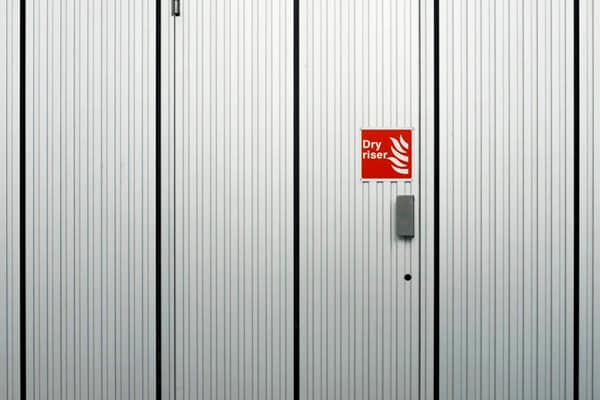
When fire breaks out, human response becomes unreliable fast. People panic, make poor decisions, or simply aren’t present when emergencies start. The fire safety systems that matter most are the ones that work automatically—no buttons to push, no decisions to make, no one needed to activate them. These passive and automatic protections form the backbone of building fire safety precisely because they function regardless of whether anyone does the right thing.
Understanding which fire protection works independently of human action helps explain why some buildings maintain safety even when everything else goes wrong.
Fire-rated construction that just exists
The most fundamental passive fire protection is the building structure itself. Fire-rated walls, floors, and ceilings don’t require activation or maintenance beyond basic integrity checks. They’re just there, resisting fire spread through their material composition and construction method.
A two-hour fire-rated wall will slow fire penetration for roughly two hours whether anyone knows it’s there or not. It doesn’t need power, it doesn’t need someone to operate it, and it works the same at 3 AM on a weekend as it does during business hours when the building is fully staffed. This reliability makes properly constructed fire barriers one of the most dependable forms of fire protection available.
The key word is “properly constructed.” Fire-rated assemblies only work as intended if built correctly and maintained without breaches. A fire wall with unsealed penetrations or a damaged section loses effectiveness, but when intact, these barriers provide protection that persists regardless of building occupancy or system status.
Sprinklers that activate themselves
Automatic sprinkler systems represent one of the most successful fire safety technologies ever developed, largely because they require nothing from building occupants. When heat reaches the sprinkler head, a temperature-sensitive element fails, water flows, and fire suppression begins. No alarms need to be heard, no evacuation needs to happen, no fire department needs to arrive.
This automatic activation means sprinklers start controlling fires before anyone might even know there’s a problem. A fire starting at 2 AM in an unoccupied warehouse gets addressed immediately, not hours later when someone finally notices smoke. The system operates on simple physics—heat rises, reaches the sprinkler, triggers release—with no human decision-making in the loop.
The limitation of sprinklers is that they need water supply and intact piping, but within those constraints, they function independently and reliably. Buildings with properly maintained sprinkler systems have dramatically better fire outcomes than those without, precisely because the protection activates when needed rather than when someone remembers to activate it.
Self-closing fire doors
Fire doors only work if they’re closed during a fire. Doors that people prop open or that don’t close properly might as well not exist. This is why modern fire door assemblies include automatic closing mechanisms that require no human intervention.
These systems hold doors open during normal operations but release automatically when smoke detectors activate or when fusible links melt from heat. The door closes and latches on its own, creating the barrier it was designed to provide. Occupants don’t need to remember to close doors while evacuating, and doors close even if no one is present to close them manually.
The reliability here comes from removing human behaviour from the equation. People in a burning building have more urgent concerns than ensuring doors close behind them. Automatic closure means compartmentation happens regardless of evacuation chaos, protecting uninvolved areas even when occupants flee without looking back.
Natural smoke ventilation through physics
Smoke rises. This simple fact of physics enables natural ventilation systems that function without power, fans, or human activation. When properly designed, these systems use the buoyancy of hot smoke to create airflow that removes smoke from buildings through roof openings.
Automatic opening vents triggered by heat or smoke detection operate independently once installed. When fire conditions develop, the vents open and smoke exhausts upward through the natural stack effect. There’s no reliance on electrical systems that might fail, no mechanical equipment that needs maintenance beyond the opening mechanism itself. Buildings with effective natural ventilation such as https://surespancovers.com/product-category/smoke-vents/ benefit from smoke control that continues working even during power failures or when other building systems have been compromised by fire.
This passive approach to smoke management has particular value during extended fire events where mechanical systems might be damaged or where backup power eventually runs out. As long as the vents can open and the building has adequate air inlets, smoke removal continues through basic physics rather than active mechanical intervention.
Fire-resistant materials that don’t burn
Some building materials simply resist burning better than others. Concrete doesn’t ignite. Gypsum board contains water that must be driven off before it will burn. Fire-retardant treated wood resists ignition and slows flame spread. These material choices provide protection that requires no activation, no maintenance, and no human awareness.
The fire protection comes from the inherent properties of the materials themselves. A concrete column won’t burn regardless of what happens around it. Gypsum walls will slow fire spread whether anyone knows they’re fire-resistant or not. This passive resistance buys time without depending on any active system functioning correctly.
Material selection becomes particularly important in areas where active fire protection might be limited or where fires might burn undetected for extended periods. The right material choices ensure that even a worst-case scenario—no detection, no suppression, no human intervention—still results in slowed fire development rather than immediate catastrophic spread.
Compartmentation that limits spread
Dividing buildings into compartments with fire-resistant boundaries creates natural limits on fire spread that function automatically. When a fire starts in one compartment, the barriers surrounding that space resist penetration, keeping fire contained even without active suppression.
This compartmentation works continuously without anyone needing to do anything. The fire might consume everything in one compartment, but the barriers prevent spread to adjacent spaces for the duration of their fire rating. This gives time for detection, evacuation, and emergency response without requiring that any particular system activate successfully.
The effectiveness of compartmentation depends on barrier integrity—doors must close, walls must be sealed around penetrations, and the construction must be maintained properly. But once established, compartmentation provides ongoing protection independent of building occupancy or active system status.
Why passive protection matters most
The common thread through all these systems is independence from human action and from building systems that might fail. Passive fire protection works when power is out, when buildings are unoccupied, when active systems malfunction, and when people make poor decisions under stress.
This reliability makes passive protection the foundation of building fire safety. Active systems—alarms, communication, mechanical suppression—add layers of protection and improve outcomes, but passive systems ensure baseline safety even when everything else fails. Buildings with strong passive protection can survive fires that would destroy structures relying primarily on active systems.
Designing for independence
The best fire safety strategies layer active and passive protections, but they ensure passive systems are adequate to provide minimum acceptable safety independently. This means fire-rated construction that actually compartmentalizes, materials that resist burning, sprinklers that will activate reliably, and doors that close automatically.
It also means maintaining passive protections even when they seem less urgent than active system repairs. A broken fire alarm is obvious and gets attention. A fire door with a damaged closer might go unrepaired for months because it’s not clearly failing. But during a fire, that door’s failure to close could be catastrophic.
The fire protection that matters most is the protection that works without anyone needing to do the right thing. Buildings designed around this principle—with strong passive systems that function independently—are the ones that survive fires and protect occupants even when human response fails or active systems malfunction. That independence, more than any high-tech active system, determines whether buildings remain safe when fires occur.



Leave a Comment