
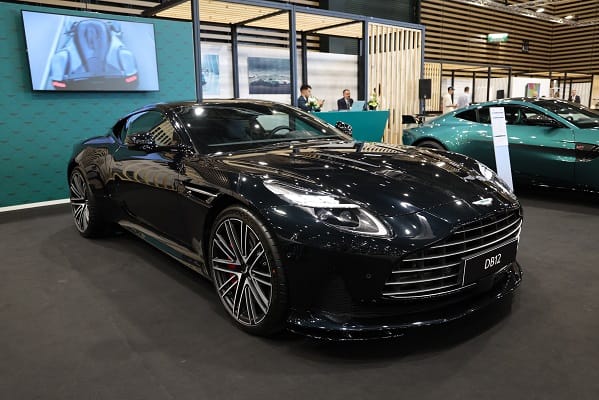
Aston Martin Lagonda has secured a fresh £50 million financing package as it reported another quarterly loss, underscoring the ongoing financial strain facing the luxury carmaker despite hopes pinned on its next-generation supercar range.
The investment comes through a vehicle led by billionaire shareholder Lawrence Stroll, who has been spearheading efforts to stabilise the company’s balance sheet and restore profitability.
The group reported an adjusted pre-tax and interest loss of £56.9 million for the first quarter of 2026, an improvement on the £64.5 million loss recorded a year earlier, but still reflecting persistent pressure on margins and demand.
Sales volumes dipped slightly to 939 vehicles, with a sharp decline in the UK partially offset by stronger performance in the Americas.
The company is now banking on deliveries of its new £850,000 Aston Martin Valhalla, with around 500 expected to be sold this year as it attempts to return towards breakeven.
Despite ongoing restructuring, including plans to cut up to 600 jobs — around a fifth of its workforce — the business said it expects profitability to improve over the course of the year.
Chief executive Adrian Hallmark said the results confirmed the group was “on track to deliver material financial improvement”, adding that stronger performance is expected as new models come on stream and operational discipline continues.
However, the company acknowledged a challenging global backdrop, citing US tariff policy, changes to China’s luxury tax regime, and wider geopolitical instability, including the conflict in the Middle East, as continuing risks to demand and supply chains.
Under existing trade arrangements, UK-built vehicles face a 10pc US import tariff up to a quota of 100,000 units, rising to 27.5pc beyond that threshold, adding further complexity for premium exporters such as Aston Martin.
While the group said the Middle East conflict had not materially affected trading in the first quarter, it warned it continues to monitor potential impacts on consumer confidence and global supply chains.
The latest update highlights the precarious position of Britain’s luxury automotive sector, which is leaning heavily on high-margin niche models and wealthy buyers to offset structural pressures across the wider industry.





Leave a Comment