
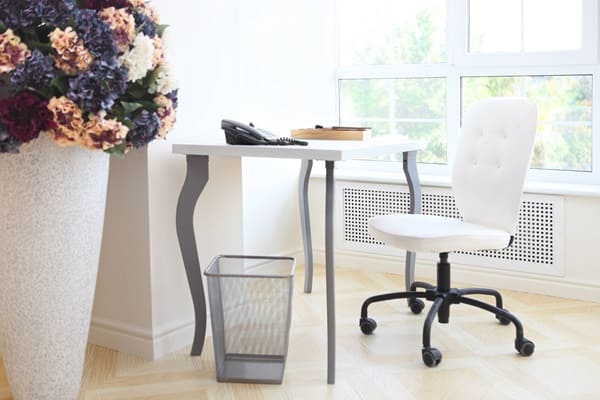
Modern consumer markets are shifting from standardized mass-produced products to solutions that accommodate individual needs and preferences. This trend, evident across various industries, is particularly pronounced in the furniture sector. Consumers’ desire for self-expression, unique interiors, and products perfectly aligned with their functional and aesthetic requirements is driving demand for customized furniture. The relevance of this topic stems from the fact that customization fundamentally affects the entire value chain in furniture business—from design and material selection to production, logistics, and customer interaction. Traditional mass-production models lack the flexibility to meet this demand, prompting companies to revise strategies and adopt new approaches. The purpose of this article is to analyze the phenomenon of furniture customization, its driving forces, impact on the market and production processes, and associated challenges and opportunities.
Customization is the process of adapting a product or service to meet the individual requirements of a specific customer. Unlike simple personalization (e.g., addressing a customer by name), customization involves modifying the product itself. The concept of mass customization, introduced by B. Joseph Pine, describes the ability of companies to produce individualized goods and services with efficiency approaching that of mass production [1].

Source:: Prosumer Index
In furniture, customization occurs at multiple levels: from choosing colors or upholstery for standard models—cosmetic customization—to configuring dimensions, materials, internal components, and structural elements—collaborative or adaptive customization. This trend is driven by changing consumer behavior: the desire for products tailored to specific functional needs (e.g., furniture for irregular spaces), aesthetic preferences, uniqueness, and self-expression. Customized furniture is also perceived as having higher value [3]. This aligns with broader trends in the “experience economy” and individualized consumption.

Source Experiment A
The shift to a customization model requires significant restructuring of traditional production processes, which are oriented toward large batches of uniform products. Integration of flexible technologies and adaptive management systems is necessary. Digital design tools and online configurators become an integral part of customer interaction, allowing clients to visualize the final product and choose options such as materials, dimensions, and fittings. This data is directly transmitted to the production system. Production flexibility is achieved through the use of CNC equipment, which allows rapid reconfiguration for manufacturing different components, modular design principles, and, in some cases, additive manufacturing (3D printing) to create unique components or prototypes. Supply chain management also becomes more complex: it is necessary to maintain a wider range of materials and components, ensure timely delivery for specific orders, and coordinate with suppliers of custom elements [2]. Effective management of these processes requires integrated information systems capable of tracking each individual order at all stages—from configuration to shipment.
The trend toward customization drives the transformation of business models in the furniture industry. There is a shift from warehouse production to made-to-order or assemble-to-order models, reducing the risks associated with storing large volumes of finished products. Direct-to-consumer sales are actively developing, with manufacturers using online platforms and configurators to interact directly with customers, bypassing traditional retailers. This requires new competencies in digital marketing, customer experience management, and last-mile logistics. The process of purchasing customized furniture becomes more interactive, involving the client in co-creation [3].
Pricing also changes: instead of standard price lists, value-based pricing is often used, taking into account the uniqueness and degree of product personalization. Marketing communications shift from promoting specific models to demonstrating customization capabilities and the benefits of an individualized approach. The role of physical stores also changes: they may transform into showrooms or design studios where customers can explore materials and receive consultation on configuring their order.
Despite its attractiveness to consumers, moving to a customization model presents significant challenges for manufacturers. The main difficulties lie in managing increased complexity—in design, production planning, logistics, and the management of diverse components for individual orders. Significant investments are required in flexible manufacturing equipment, software, and staff training. Production times for customized furniture are generally longer than for mass production, requiring effective communication with clients to manage expectations. There is a risk of increased production costs if manufacturing and logistics processes are not optimized. Forecasting demand for individual options and materials becomes more complex. However, customization also offers significant opportunities. It allows companies to differentiate from competitors offering standardized products and build a strong brand associated with an individualized approach and high quality. There is potential for higher pricing and increased margins. The risks associated with overstocking finished products are reduced. Close interaction with the client during customization allows collection of valuable data on preferences, which can be used to improve products and services. Customization enables effective satisfaction of niche market needs and solutions for non-standard requirements.
Thus, customization, driven by individual consumer preferences, is a powerful trend transforming the modern furniture industry. It requires companies to revise traditional approaches to design, production, supply chain management, and customer interaction. Implementing mass customization principles, based on digital design technologies and flexible production systems, becomes essential for maintaining competitiveness. Analysis shows that, despite the significant challenges associated with managing complexity and necessary investments, a strategic focus on customization provides furniture companies with substantial opportunities for differentiation, value creation, increased customer loyalty, and strengthened market positions. Recommendations for market participants include investing in user-friendly online configurators, implementing flexible production technologies and integrated information systems, building adaptive supply chains, developing staff competencies in digital design and complex order management, and creating marketing strategies emphasizing the benefits of personalization. These principles apply to both large manufacturers and small companies seeking a niche in the evolving furniture market.
References
|




Leave a Comment