
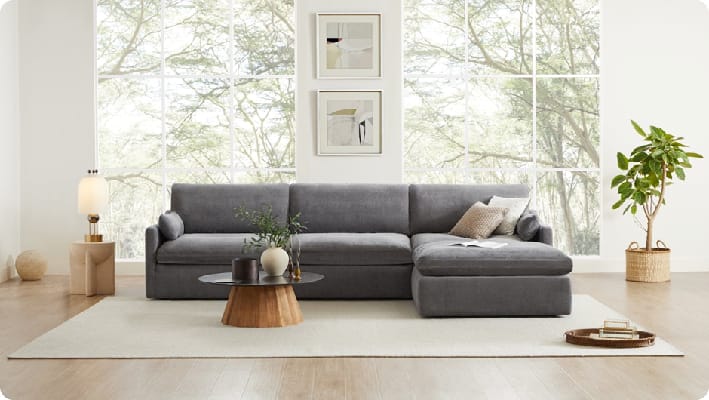
Choosing the right seating option for your living room can significantly impact both the functionality and aesthetics of your space. Two popular choices that often come head-to-head are sofas and sectionals. Each has its unique benefits and potential drawbacks, making the decision a crucial one for homeowners and interior design enthusiasts alike. In this comprehensive guide, we’ll explore the key differences between sofas and sectionals, helping you make an informed decision that best suits your living space and lifestyle.
Before diving into the pros and cons, let’s clarify what we mean by sofas and sectionals.
What is a Sofa?
A sofa, also known as a couch, is a piece of furniture designed for seating multiple people. Typically, sofas have a back and armrests and can comfortably seat two to four people. They come in various styles, from traditional to modern, and can be upholstered in a wide range of materials, including fabric, leather, and microfiber.
Sofas are usually standalone pieces that can be easily moved and rearranged within a room. They’re a staple in most living rooms and come in different sizes, from loveseats (seating for two) to larger three or four-seater options.
What is a Sectional?
A sectional is a larger seating option composed of multiple sections that can be arranged in various configurations. These sections typically include a combination of sofas, chaises, and sometimes even recliners. Sectionals are designed to provide ample seating and often form an L or U shape when fully assembled.
Sectional sofas offer more seating capacity than traditional sofas and can be customized to fit specific room layouts. They’re particularly popular in larger living spaces or for families who enjoy entertaining.
Factors to consider when choosing between a Sofa and Sectional
Several key factors should influence your decision between a sofa and a sectional:
Room size and layout
The size and layout of your living room play a crucial role in determining whether a sofa or sectional is more suitable:
- For smaller spaces, a sofa might be the better choice as it takes up less room and can be more easily positioned.
- Larger rooms or open-plan living areas can often accommodate sectionals well, allowing you to define separate zones within the space.
- Consider the shape of your room – L-shaped sectionals can fit nicely into corners, while U-shaped configurations work well in square rooms.
Seating capacity
Think about how many people you typically need to seat in your living room:
- If you have a small family or rarely entertain large groups, a sofa might provide sufficient seating.
- For larger families or those who frequently host gatherings, a sectional can offer more seating without the need for additional chairs.
Versatility and flexibility
Consider how often you like to change your room’s layout:
- Sofas offer more flexibility in terms of rearranging your space, as they’re easier to move around.
- Sectionals, while less mobile, often come with modular designs that allow you to reconfigure the pieces in different ways. One of the biggest perks of a sectional sofa is its versatility, allowing you to rearrange pieces to suit different occasions or room layouts. Homeowners looking for comfortable sectional sofas always consider factors like cushion firmness, fabric durability, and overall support to ensure long-term satisfaction. Whether it’s for lounging, hosting guests, or even taking a quick nap, a well-chosen sectional can elevate both comfort and functionality in a living space. With so many styles and configurations available, finding the perfect fit can transform a room into a cozy and inviting retreat.
Style and aesthetics
Both sofas and sectionals come in a variety of styles, but they can have different impacts on your room’s overall look:
- Sofas tend to have a more formal appearance and can be easier to incorporate into various design styles.
- Sectionals often create a more casual, relaxed atmosphere and can become a dominant feature in the room.
Advantages of Sofas
Sofas offer several benefits that make them a popular choice for many homeowners:
Space-saving design
Sofas are generally more compact than sectionals, making them ideal for smaller living rooms or apartments. They leave more floor space visible, which can make a room feel larger and more open.
Easy to move and rearrange
The standalone nature of sofas makes them much easier to move around. This is particularly beneficial if you like to refresh your room’s layout frequently or if you anticipate moving homes in the near future.
Wide variety of styles
Sofas come in an extensive range of styles, from classic Chesterfields to sleek mid-century modern designs. This variety makes it easier to find a sofa that perfectly complements your existing decor or serves as a statement piece in your living room.
Advantages of sectionals

Sectionals have their own set of benefits that make them attractive for many living spaces:
Maximised seating
The primary advantage of sectionals is their ability to seat more people comfortably. This makes them ideal for large families or those who love to entertain guests regularly.
Customisable configurations
Many sectionals are modular, allowing you to arrange and rearrange the pieces to suit your room’s layout or your changing needs. This flexibility can be particularly useful in adapting to different living situations over time.
Perfect for large families or entertainers
If you often host movie nights, game days, or other social gatherings, a sectional provides ample seating without the need for additional chairs. This can create a more cohesive and inviting atmosphere for socializing.
Potential drawbacks to consider
While both sofas and sectionals have their strengths, it’s important to consider potential drawbacks as well:
Sofas: Limited seating and less versatility
- Sofas typically seat fewer people than sectionals, which might be inconvenient for larger families or frequent entertainers.
- They offer less versatility in terms of configuration options compared to modular sectionals.
Sectionals: Space requirements and potential overwhelming presence
- Sectionals require more space and can overwhelm smaller rooms.
- They can be more challenging to move or rearrange due to their size and multiple components.
- In some cases, sectionals might limit furniture placement options in your living room.
Making the final decision
When it comes to choosing between a sofa and a sectional, there’s no one-size-fits-all answer. The right choice depends on your specific circumstances:
Assessing your specific needs
Consider your lifestyle, family size, entertaining habits, and the primary function of your living room. A sofa might be perfect for a couple in a small apartment, while a growing family in a spacious home might benefit more from a sectional.
Budget considerations
Generally, sectionals tend to be more expensive than sofas due to their larger size and increased complexity. However, investing in a quality sectional could save you money in the long run if it eliminates the need for additional seating furniture.
In conclusion, both sofas and sectionals have their place in modern home design. A sofa might be the better choice if you value flexibility, have a smaller space, or prefer a more formal look. On the other hand, if maximum seating and a casual, inviting atmosphere are your priorities, a sectional could be the perfect fit.
Remember, the best choice is the one that meets your needs, fits your space, and reflects your personal style. Whether you opt for a sleek modern sofa or a cozy, sprawling sectional, the right seating solution will enhance your living space and provide comfort for years to come.





Leave a Comment