
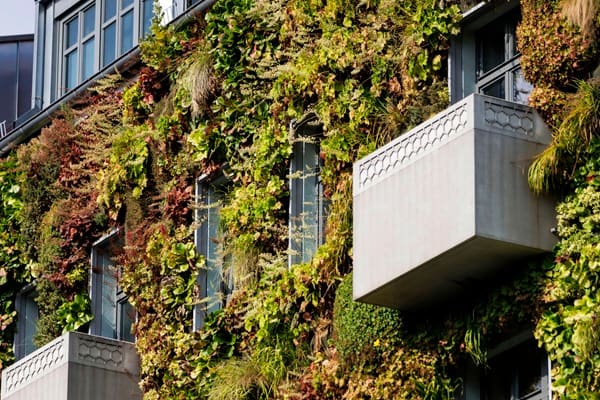
It’s not so long ago that the term ‘biodiversity’ would have brought to mind images of distant rainforests or David Attenborough documentaries. Today, however, it’s a term familiar in the development and planning lexicon, due to the introduction of Biodiversity Net Gain (BNG). It’s a principle embedded in the Environment Act 2021, whereby new development will need to make the natural environment measurably better than it was previously. It’s a step that has shaken planning offices, construction sites, and local authority offices to their foundations.
Learning about biodiversity net gain
At its simplest, BNG is about requiring any development scheme to enhance the biodiversity of the site by at least 10% compared to the pre-development state. This isn’t simply about things being restored; it is about value creation, ensuring wildlife habitats are not merely safeguarded but improved. Most planning consents granted in England are included in the policy, with some excluded.
The procedure for working out this net advantage is formalised by the Defra Biodiversity Metric, a calculator measuring biodiversity values allowing like-for-like comparisons to be made between projects. It means that a residential development in Leeds and an office tower in London will be subject to the same green standards.
Implications for developers and planners
To builders, BNG introduces an additional layer of complexity to the planning process. The days of a token park or a few trees are gone. Developers now need to:
Conduct In-Depth Ecological Surveys: Well before the first brick is laid, there must be a thorough understanding of the current biodiversity. This involves habitat surveys, species inventories, and ecological impact assessment.
Designing with Nature: Urban development plans need to include biodiversity-enhancing features. These can be in the form of green roofs, bird and bat boxes, or the creation of wildflower meadows. The aim is to bring nature into urban spaces as naturally as possible.
Secure Long-Term Management: It is not just enough to create these features; they must be maintained for a minimum of 30 years. This ensures that the biodiversity advantages are long-term and not ephemeral.
For those who are confused and don’t know how to go about this new landscape, there are resources. Local authorities, like Leeds City Council, have issued guidance reports to help developers obtain the necessary net gains.
Challenges and criticisms
While the motivations behind BNG are to be commended, the policy is not immune from criticism. A recent survey conducted by academics at the University of Sheffield revealed that almost half of the nature-friendly features housebuilders had promised in new developments were not being provided. To be specific, 75% of bat and bird boxes, 83% of hedgehog highways, and all bug boxes were missing. This reveals a considerable disconnect between planning and action, and one wonders about enforcement and accountability.
Secondly, local developers are concerned that developers will shun local enhancement on their grounds by purchasing biodiversity credits elsewhere. While on the positive side this offers flexibility, on the negative side, it implies local biodiversity could be put in jeopardy for the sake of meeting numerical requirements.
The role of local authorities
Local authorities are at the front line for the provision of BNG. Their brief is:
Testing and Approving Biodiversity Gain Plans: The developers must submit detailed plans that describe how they intend to deliver the net gain. Councils must check the plans to determine if they are robust and feasible.
Monitoring Compliance: Post-construction, it’s important to ensure that the biodiversity improvements pledged have been delivered and are being effectively managed.
Providing Guidance and Support: Recognizing that this is new territory for the majority, councils have a responsibility to deliver information and guidance that will help developers meet their requirements.
Looking ahead
The success of BNG relies on efficient working together among developers, planners, ecologists, and the wider community. It’s a policy that goes against traditional development models, urging all parties to view nature not as an obstacle but as a core component of sustainable development.
The hope is that BNG will bring a new era of development—one where town growth and environmental conservation are on equal footing. It’s a lofty goal, but with careful planning, rigorous enforcement, and a genuine commitment to enhancing the UK’s natural heritage, it’s within reach.




Leave a Comment